The Direct Answer Arlington Homeowners Need
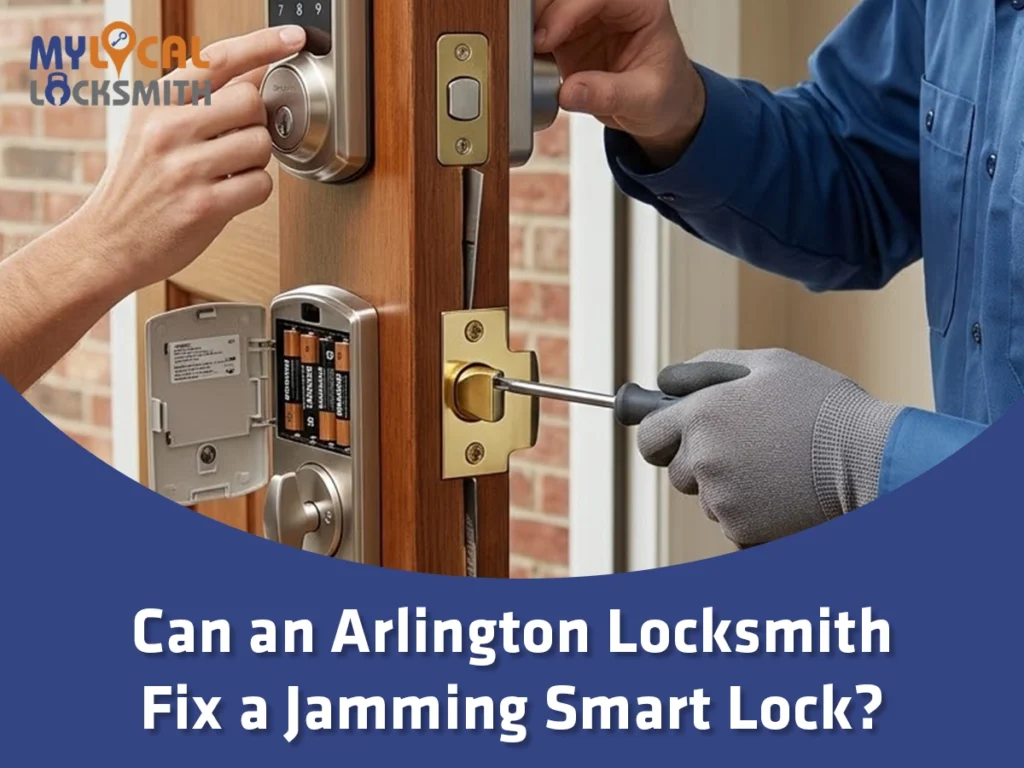
Here is the surprising part. A smart lock that reports a jam may not have an electronic failure at all. The bolt may simply be rubbing the strike or frame. Can an Arlington locksmith fix a jamming smart lock? Often, yes. A locksmith can inspect the door, bolt, cylinder, strike, hinges, mounting, and installation. However, failed circuit boards, sealed motors, account problems, and warranty parts may need the lock maker.
AI Overview: An Arlington locksmith can often fix a smart lock that keeps jamming when the cause is mechanical or installation related. Common causes include door misalignment, a shallow bolt hole, thick weather seals, loose hinges, mounting screws that are too tight, an incorrect handing process, or a worn deadbolt. Weak batteries may also reduce reliable operation. First, test the lock manually with the door open. If it works while open but jams when closed, alignment is a strong clue. If it jams while open, inspect mounting, calibration, the bolt, and internal parts. A locksmith can correct many physical faults and confirm proper installation. The lock maker may be better suited for app accounts, firmware, proprietary electronics, warranty approval, or model specific replacement parts.
The word jam describes a symptom. It does not name the failed part. That is why a careful inspection comes before a reset or replacement.
- A locksmith is usually the right first call for physical resistance, poor alignment, and installation faults.
- Manufacturer support is often better for software accounts, sealed electronics, and warranty claims.
The useful answer is not simply yes or no. It is knowing which side of the lock has failed.
2. What Smart Lock Jamming Actually Means
People use jam to describe several problems. The bolt may stop halfway. The motor may make noise but fail to move it. The keypad may accept a code, yet the door stays locked.
Those symptoms can come from different systems:
- Mechanical parts include the deadbolt, cylinder, tailpiece, strike, hinges, door, and frame.
- Electronic parts include the battery circuit, keypad, motor controls, sensors, radio, and main board.
A connection failure is not always a jam. An offline lock may still move normally by keypad or thumb turn.
Listen to what the lock does. Note the lights, sounds, app message, and bolt position. Do not guess what those signals mean across every brand. Error messages vary by model.
3. Start With the Safest Open Door Test
If you can open the door safely, keep it open. Then operate the lock manually and electronically without forcing it.
Compare two conditions:
- If the bolt moves well while open but jams when closed, alignment deserves attention.
- If the bolt jams while open, mounting, calibration, power, or lock damage may be involved.
Kwikset gives this same basic test in its smart lock door alignment guidance. The company advises comparing manual operation with the door open and closed.
Use the inside thumb turn if present. Then try the keypad or app once while the door remains open. Stop after a few gentle tests.
4. Door Alignment Is a Common Hidden Cause
A smart deadbolt motor is small. It is meant to move a free bolt, not pull a tight door into position.
When the door closes, the bolt must enter the strike opening without rubbing. Even a small shift can create resistance. Loose hinges, thick weather seals, door movement, or frame changes may be involved.
Look for these clues:
- The lock works when you push, pull, or lift the door.
- The bolt and strike show fresh scrape marks or bright metal.
Do not grind the strike at random. That can hide a hinge problem or weaken the fit.
A locksmith can inspect the hinges, frame, strike, bolt pocket, and door pressure. The goal is free bolt travel without forcing the door.
5. Bolt Hole Depth and Weather Seals Can Block Travel
The bolt needs enough clear space behind the strike. If the pocket is too shallow, the bolt may hit wood before reaching its full position.
Weather seals can create another kind of pressure. New or thick material may push the door away from its normal resting point.
Useful signs include:
- The smart lock jams near the end of the locking motion.
- The door springs outward when the latch is released.
Do not deepen the bolt pocket before checking its position. Also, do not remove weather protection without confirming the cause.
6. Low Power Can Look Like Mechanical Trouble
Weak batteries may let the keypad light up while leaving too little power for reliable motor movement. The lock may sound slow or stop before the bolt completes its travel.
However, battery advice is model specific. One lock may require alkaline cells. Another may use a maker supplied battery pack.
Use these safe rules:
- Follow the exact battery type and replacement steps in the maker instructions.
- Replace the full set together unless the manual clearly says otherwise.
Fresh power is a good test, but it is not a repair for friction. A motor that fights a rubbing bolt may drain batteries again.
If the lock keeps reporting low power after correct replacement, note the warning and contact support. Do not bypass the battery system.
7. Installation Pressure May Bind the Lock
Mounting screws hold the exterior and interior assemblies together. If they are too loose, the lock can shift. If they are too tight, they can place pressure on the mechanism.
The tailpiece must also pass through the bolt correctly. A poor fit can make the thumb turn or motor bind.
Watch for these signs:
- The lock began jamming soon after installation or door work.
- The inside unit sits crooked, moves, or feels tight.
A locksmith can remove mounting pressure, inspect the door preparation, and reinstall the lock to the model requirements. That work must protect the wire and data cable where present.
Installation matters. A good smart lock can perform badly when the door holes, backset, or mounting position are wrong.
8. Handing and Calibration Can Send the Bolt the Wrong Way
Many smart locks need to learn the direction and full travel of the bolt. Makers may call this handing, calibration, or setup.
If that process was skipped or failed, the motor may move incorrectly. It may stop early, reverse, or report a jam.
Before changing settings:
- Find the exact model number and its current support guide.
- Record active access methods before any reset or new setup.
Do not copy reset steps from another model. Also, calibration cannot move a bolt through a blocked strike.
A locksmith familiar with the model may rerun setup after correcting the door. For account ownership or app registration, the lock maker may need to help.
9. The Mechanical Cylinder or Bolt May Be Worn
Smart locks still contain physical moving parts. A keyed model may have a cylinder. The bolt, tailpiece, gears, or thumb turn may wear or become damaged.
Mechanical trouble is more likely when:
- The physical key or inside turn also binds with the door open.
- The bolt feels rough, loose, or uneven by hand.
Do not use pliers on the key or thumb turn. Added force can break parts and make entry harder.
Likewise, do not spray an unknown product into the lock. Lubricant needs depend on the exact hardware and maker instructions.
A locksmith can inspect the cylinder and bolt without blaming the electronics first. Repair may involve a compatible cylinder, bolt, or mounting part.
If the lock is physically damaged, our guide on why you should never force a jammed lock explains the risk of added pressure.
10. App and Connection Problems Are Not Always Lock Jams
Suppose the app cannot reach the lock, but the keypad and thumb turn still work. That points toward communication rather than a blocked bolt.
Possible areas include the phone, app, permissions, bridge, hub, router, wireless signal, or account. A locksmith may confirm the lock moves, but cannot control every outside service.
Separate the symptoms:
- Offline or unavailable messages suggest a connection path problem.
- Jammed or incomplete bolt motion suggests a physical or motor problem.
Follow the exact maker support steps for the model. Avoid deleting the lock from every account as a first move.
Also, protect your access codes and account details. A technician may need to see an error screen, but should not need your personal password.
For broader planning, read how smart door locks affect home security before adding more connected devices.
11. What an Arlington Locksmith Can Often Repair
A locksmith works on the complete opening, not just the keypad. That is valuable because many jams begin outside the electronics.
Depending on the lock and condition, a locksmith may be able to:
- Correct door, hinge, bolt, strike, or frame alignment.
- Repair mounting, replace compatible physical parts, or reinstall the lock.
The technician can also test the manual key, cylinder, thumb turn, and bolt travel. Then the electronic operation can be checked again.
Some locksmiths support more smart lock brands than others. Ask whether the technician works with your exact model before the visit.
The best service does not promise repair before inspection. It explains what failed, what can be kept, and what should be replaced.
For another view of the role, see how a residential locksmith improves home security.
12. When the Lock Maker Should Take Over
Manufacturer support may be the better route when the mechanical opening works but the device still fails.
Examples include:
- A confirmed circuit, keypad, sensor, radio, or sealed motor failure.
- Account ownership, firmware, warranty, or proprietary part questions.
Yale warns in its smart lock troubleshooting guidance that a factory reset removes owner and guest data for the model discussed. Other brands have their own rules.
That is why a reset should not be a casual first step. If the unit is under warranty, avoid changes that could affect coverage.
Sometimes the cleanest plan uses both professionals. A locksmith corrects the door and physical installation. The maker then replaces or supports the electronic unit.
13. What Homeowners Can Check Safely
Keep home troubleshooting simple. You are gathering evidence, not rebuilding a security device.
Start here:
- Test manual bolt travel with the door open, then compare it with the door closed.
- Install the correct fresh batteries only as the model instructions direct.
Check whether the problem follows one access method or all of them. For example, does the keypad fail while the key still works?
Do not remove wiring, open sealed electronics, or copy random reset instructions. Do not share account passwords with a service provider.
If the lock will not secure the door, treat the problem as urgent. Use another safe lock or occupied entry point while arranging help.
14. Repair or Replace the Smart Lock?
Repair makes sense when the unit is sound and the fault lies in alignment, mounting, setup, or a replaceable physical part.
Replacement becomes more likely when:
- The lock has severe wear, impact damage, corrosion, or a failed sealed component.
- The maker no longer supports needed parts, software, or account functions.
Age alone does not prove replacement is needed. Compare labor, parts, warranty coverage, security needs, and expected service life.
If replacement is recommended, confirm the new model fits the door and supports your preferred access methods. Compare a deadbolt with a smart lock before choosing.
Do not let a useful feature hide weak door security. The strike, frame, bolt, and installation still matter.
15. Two Honest Arlington Smart Lock Examples
These examples are illustrative. They show how similar jam alerts can lead to different service plans. They do not describe named customers or claim completed jobs.
Example one: the lock works with the door open
An Arlington homeowner says the smart deadbolt jams each evening. With the door open, the key, thumb turn, and motor all move smoothly. With the door closed, the bolt touches the strike.
The likely first step is an alignment inspection.
- The motor and bolt complete their travel with no frame pressure.
- Fresh scrape marks show where the bolt meets resistance.
Example two: the lock jams while open
Another homeowner tests the unit with the door open. The thumb turn feels tight, and the motor stops halfway. Fresh batteries do not change the result.
The likely first step is a lock and mounting inspection.
- Door alignment cannot explain resistance while the door is open.
- Manual and powered operation both show the same physical problem.
These cases prove one point. A jam message is a starting clue, not a final diagnosis.
16. Warning Signs That Need Prompt Help
Do not wait if the smart lock leaves the main door unable to lock or unlock.
Seek prompt help when:
- The bolt is stuck, the key is trapped, or the inside turn will not move.
- The unit smells hot, shows battery damage, or has visible impact marks.
Stop using the electronic motor if it keeps grinding or repeating failed cycles. Do not touch leaking battery material.
If there are signs of forced entry or tampering, protect the area and contact the proper authorities. Avoid changing possible evidence first.
For an occupied home, make sure every person knows a safe exit. A smart feature should never block urgent egress.
You can also review when emergency locksmith service is appropriate before deciding whether the problem can wait.
17. How to Choose a Smart Lock Locksmith in Arlington
Texas includes locksmiths in the private security profession. The Texas Department of Public Safety provides licensing and registration resources, including a license search.
Before scheduling, share the exact brand, model, door type, error message, and symptoms. Say whether the bolt works with the door open.
Ask these questions:
- Does the technician service this model and its physical installation?
- Will the company explain the diagnosis and written price before added work?
A responsible locksmith should also verify your right to access the property. That step protects homeowners, tenants, and lawful users.
Avoid anyone who promises a circuit repair without seeing the device. Also, question automatic drilling or replacement when the door has not been tested.
My Local Locksmith – Arlington can inspect the physical opening, identify the repair boundary, and explain when maker support is the better next call.
18. Can an Arlington Locksmith Fix a Jamming Smart Lock? Final Answer
Yes, an Arlington locksmith can often fix a jamming smart lock when the fault involves the door, bolt, strike, cylinder, mounting, or installation.
Still, not every smart lock failure belongs to a locksmith. Proprietary electronics, user accounts, firmware, sealed motors, and warranty parts may need the maker.
Use this simple split:
- If the bolt meets resistance, start with the door and physical lock.
- If the lock moves freely but the app or account fails, start with maker support.
The open door test is the best early clue. Smooth open door operation points toward alignment. Continued resistance points toward the lock or mounting.
Do not force the unit. Do not reset it without knowing what data will disappear. Also, do not replace the entire lock before someone checks the door.
A smart lock should make entry simpler. When it starts fighting the frame, draining power, or stopping halfway, deal with the cause early.
Frequently Asked Questions
Why does my smart lock keep saying it is jammed?
The bolt may be hitting the strike, frame, or a shallow pocket. Mounting pressure, failed calibration, low power, or damaged internal parts can also trigger trouble. Test manual operation with the door open. If the bolt moves freely while open but jams when closed, door alignment is a strong first clue.
Can a locksmith open a jammed smart lock?
A locksmith may be able to restore lawful entry by diagnosing the door and lock, then choosing an appropriate method. The exact approach depends on the model, backup cylinder, bolt position, and damage. The technician should verify your right to enter and try to protect the door and hardware whenever a safe method is available.
Why does my smart lock work when the door is open?
If the lock works while open but fails when closed, the bolt likely meets resistance at the strike or frame. Loose hinges, door movement, thick weather seals, or an incorrect bolt pocket may contribute. A locksmith should inspect the complete opening before moving the strike or removing frame material.
Will new batteries fix a jamming smart lock?
Fresh, approved batteries may help when the motor lacks power. However, batteries cannot correct a rubbing bolt, poor mounting, failed handing process, or damaged mechanism. Use the exact battery type listed for your model. If the problem returns, check for physical resistance instead of replacing batteries again.
Should I reset my smart lock when it keeps jamming?
Not as the first step. A reset may erase codes, users, schedules, and connections. It also cannot fix a bolt that hits the frame. First test the lock with the door open, confirm correct batteries, and inspect alignment. Follow only the reset instructions for your exact model when the evidence points toward setup.
Contact My Local Locksmith – Arlington
Does your smart lock keep jamming, stopping halfway, or draining batteries? My Local Locksmith – Arlington can inspect the door, strike, bolt, cylinder, mounting, and installation. You receive a clear explanation of what can be repaired and when maker support is needed.
- Address: 805 Washington Dr a1, Arlington, TX 76011
- Main Phone: 682-253-1593
- Website: www.mylocallocksmithtx.com