A Powerful Guide to Safe and Reliable Business Exits
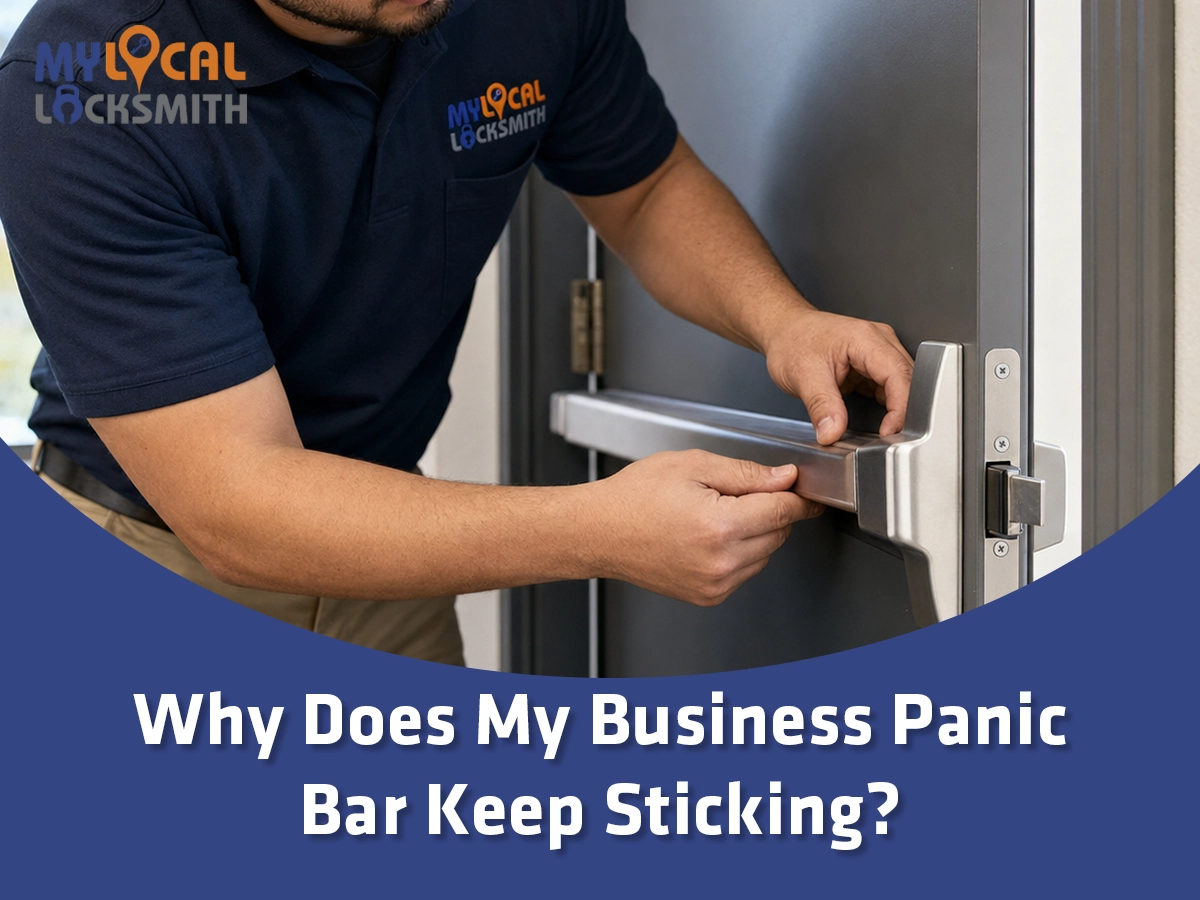
Here is a surprising fact: a panic bar that opens after several pushes may still be unsafe. An exit device should release the door reliably when people need it.
AI Overview: A business panic bar may keep sticking because the door is misaligned, the latch meets the strike poorly, internal parts are worn, fasteners are loose, or dirt affects movement. Weather, frame shifts, closer pressure, vertical rod problems, and electric access parts can also contribute. Do not force, block, tape, or dismantle the device. First, keep the affected exit available only if it releases safely. Then, have a qualified commercial locksmith inspect the whole opening. Repair may involve alignment, approved maintenance, parts replacement, or a complete exit device replacement. Fire rated doors and required exits need extra care because every component must preserve safe egress.
A sticking panic bar is more than an annoying door problem. It can delay staff, customers, and visitors during a normal exit. More importantly, it can create doubt during an emergency.
- Stop using force as a daily solution.
- Arrange a full door and exit device inspection.
1. Know What a Sticking Panic Bar Really Means
People describe several problems as “sticking.” The push pad may feel hard. It may move but fail to retract the latch. The latch may retract, yet the door still catches at the frame.
The bar may also stay pressed after use. Sometimes the device works when the door is open but fails when closed.
However, do not repeatedly test a required exit if it stops releasing. Post someone nearby and follow the site’s emergency plan. Ask the property manager or local authority for direction when safe egress is uncertain.
- Describe whether the bar feels hard, slow, loose, or blocked.
- Note whether the door fails while open, closed, locked, or under pressure.
2. Check for Door and Frame Misalignment
Misalignment is a common reason an exit latch drags. The latch must enter and leave the strike cleanly. A small shift can create friction that feels like a bad panic bar.
Commercial doors can move because hinges wear, screws loosen, frames settle, or repeated traffic changes the opening. Heat and weather can also affect some doors and frames. The gap may look uneven around the door.
When the door is open, the bar may retract smoothly. Once closed, the latch can bind against the strike. That pattern does not prove the strike is the only problem. A technician should also check hinges, sag, frame condition, and closer action.
Moving the strike without understanding the listed opening can create a new problem. Therefore, adjustment should preserve proper latching, fire rating, security, and exit function.
- Look for uneven gaps, fresh scrape marks, or a door that has dropped.
- Ask the locksmith to inspect the hinges, strike, frame, and latch together.
3. Watch for Latch and Internal Part Wear
Exit devices contain moving parts that work every time someone leaves. High traffic slowly wears springs, pivots, linkages, latches, and contact points. A part may become rough before it fails completely.
Warning signs include extra travel, weak return, rattling, delayed latch movement, and inconsistent release. A worn spring may not return the bar properly. A damaged linkage may move without fully retracting the latch.
The correct part depends on the device make, model, series, and configuration. Parts that look similar may not fit or perform the same way. A professional should identify the device before ordering replacements.
This overview of commercial door lock hardware explains why cylinders, latches, closers, and exit devices must work as one opening.
- Record any noise, loose movement, or slow return before service.
- Use compatible parts intended for the exact exit device.
4. Do Not Guess About Lubrication
Dirt, dust, residue, and dried lubricant can affect moving parts. Yet adding an unknown spray is not a reliable repair. The wrong product can attract debris, damage finishes, or interfere with internal components.
Each manufacturer can specify different service points and products. Some devices need limited lubrication in selected areas. Others may need cleaning, adjustment, or part replacement instead.
Spraying through gaps also hides the real cause. A temporary improvement may return after several days. Worse, excess material can reach electrical parts in an electrified device.
Therefore, use the device label and manufacturer instructions. A qualified technician can remove the cover when appropriate, inspect the mechanism, and use approved maintenance methods.
- Do not flood the bar, latch, or electric parts with a general spray.
- Ask for maintenance based on the device model and manufacturer guidance.
5. Test Whether Door Pressure Causes the Problem
The latch may be loaded against the strike. This pressure can come from a door closer, weather seal, warped door, building air pressure, or poor alignment. Pushing the bar then feels harder because the latch is trapped.
You may notice the device works after someone pulls or pushes the door slightly. That behavior is a useful symptom, but it is not a safe daily method. In an emergency, users should not need a special technique.
The technician should check closing speed, final latch action, door seals, and strike contact. However, a closer should not be adjusted in isolation. It must still close and latch the door as required.
Businesses can learn more about the full safety role of this hardware in what every business should know about push bars.
- Report whether light pressure on the door changes bar operation.
- Inspect the closer, seals, latch, and strike as a connected system.
6. Inspect Loose Fasteners and Device Movement
A panic bar should remain secure against the door. Loose mounting fasteners can let the rail, push pad, end cap, or latch case shift. That movement can change how internal parts line up.
Managers may see the device rock, sag, or pull away from the door. They may also hear a new rattle. Missing covers or damaged end caps can expose parts and invite more damage.
Do not simply tighten every visible screw as hard as possible. Some adjustments affect moving parts, door construction, or through bolts. Excess force can strip threads or distort the device.
A technician should identify why the hardware loosened. The door material, mounting method, fastener condition, and daily traffic all matter. Repair may require more than tightening.
- Report any movement between the device and the door surface.
- Replace missing or damaged fasteners with approved compatible parts.
7. Understand Vertical Rod Panic Bar Problems
Some pairs of doors use vertical rod exit devices. Rods connect the push bar to latches at the top, bottom, or both points. Their adjustment is more complex than a single rim latch.
A rod can bend, loosen, or fall out of adjustment. The top latch may not clear. The bottom latch may drag. The door may also sag and change both latch positions.
Do not disconnect rods to make the door easier to open. Doing so can stop proper latching and may alter a rated or required opening. Surface changes can also affect how the pair of doors closes.
The technician should test each latch, rod, guide, strike, coordinator, and closer. If the doors overlap, closing order may matter. The entire pair must release and secure as designed.
- Note whether the problem occurs at the top, bottom, or meeting edge.
- Have both doors inspected when the opening uses a paired system.
8. Review Electric Latch and Access Control Issues
Many businesses connect panic hardware to card readers, alarms, electric strikes, or electric latch retraction. A mechanical symptom can therefore have an electrical cause.
Low voltage, wiring trouble, failed switches, timing settings, or a weak power supply may prevent complete release. The device may work mechanically but fail during an authorized electronic opening. The reverse can also occur.
Do not bypass wiring or hold a latch open to keep traffic moving. That action can reduce security and may affect safe operation. Instead, document which credential, schedule, or control command was used.
A commercial locksmith and access technician may need to coordinate. This guide to access control systems for modern office security explains how managed credentials connect with physical door hardware.
- Compare mechanical push operation with authorized electronic release.
- Record error lights, alarm activity, timing, and credential behavior.
9. Treat Fire Exit Hardware With Extra Care
Not every panic device is fire exit hardware. A fire labeled opening uses listed components intended to support both egress and fire protection. Changes must preserve that function.
Never use wedges, tape, wire, or improvised dogging to hold a required fire door open. Never replace a listed part with an unknown substitute. A repair should follow the device listing, manufacturer guidance, and applicable code.
Flower Mound adopted the 2024 International Fire Code through Ordinance No. 30-25. The ordinance also gives the local Fire Marshal’s Office authority to administer and enforce the fire code.
The exact requirement depends on the building, occupancy, door, approved plans, and local interpretation. Therefore, a blog cannot determine code compliance for a specific opening. The property manager or Fire Marshal can address questions beyond normal repair.
- Preserve labels, listed parts, latching, and proper door closing.
- Seek local guidance when a repair changes a rated or required exit.
10. Recognize When the Problem Is Urgent
A device needs urgent attention when the door does not release on the first normal push. The same is true when the latch remains trapped, the bar will not return, or people need a special technique.
The OSHA exit route standard says employees must be able to open an exit route door from inside without keys, tools, or special knowledge. It also restricts devices that could block emergency use if they fail.
Other urgent signs include loose hardware, a blocked exit path, failed closing, or visible damage after impact. A security concern can also become urgent if the door no longer latches from outside.
Managers should follow their emergency and building procedures. A technician may provide a safe temporary measure, but it must not block egress or defeat a fire door.
- Request prompt service when normal pressure does not release the door.
- Keep the exit path clear and follow local safety direction.
11. Support Accessible and Easy Door Operation
An exit should work for people with different strength, reach, and mobility. A bar that demands unusual pressure may create a barrier even when a stronger person can open it.
The United States Access Board guide to operable parts explains that covered controls should work with one hand. They should not require tight grasping, pinching, or wrist twisting. The guide also states a maximum operating force of five pounds for covered operable parts.
Door opening force and panic hardware operation involve specific rules and exceptions. Therefore, the five pound figure should not be applied casually to every measurement. A qualified professional can evaluate the complete door.
Still, a sudden rise in needed force is a clear maintenance warning. Compare operation across normal conditions, then seek service before the problem grows.
- Take complaints about heavy or inconsistent operation seriously.
- Evaluate the bar, latch, closer, seals, and door movement together.
12. Know What a Commercial Locksmith Should Inspect
A useful inspection begins with the user’s complaint. The locksmith should observe the device with the door open and closed. Next, the opening should be checked without forcing parts.
The review may include bar travel, return action, latch retraction, strike contact, fasteners, hinges, frame gaps, closer action, door pressure, labels, and access control. Vertical rod openings require additional checks.
The technician should then explain what was found. A clear estimate should separate adjustment, maintenance, replacement parts, and complete replacement. The business can approve the right scope before work begins.
This guide to commercial lock installation appointments provides helpful questions for planning access, timing, hardware, and final testing.
- Ask for the observed cause, affected parts, and repair choices.
- Confirm that final testing covers both safe exit and outside security.
13. Decide Between Repair and Replacement
Repair may be sensible when the device is suitable, parts are available, and the door remains in serviceable condition. Alignment, approved maintenance, or a compatible part may restore reliable function.
Replacement may be better when the device is badly worn, damaged, obsolete, incomplete, or poorly matched to the door. Repeated failures can also support replacement after the entire opening is checked.
Price should not be the only factor. Consider traffic, part availability, door rating, access control needs, warranty, and future maintenance. A lower cost repair is not valuable if it leaves the same problem.
The replacement must fit the door type and intended use. It should also work with the existing trim, cylinder, closer, alarm, and electronic controls.
- Repair a suitable device when the cause can be corrected reliably.
- Replace hardware when condition, compatibility, or repeated failure justifies it.
14. Use a Practical Flower Mound Business Example
Consider a representative example. This example does not describe a specific customer. It shows how symptoms can guide a careful inspection without guessing.
A Flower Mound retail door opens smoothly before business hours. During busy periods, the panic bar feels hard and sometimes needs a second push. Staff have started pulling the door inward slightly before pressing.
The locksmith checks the device with the door open, and the latch retracts normally. With the door closed, fresh marks show contact at the strike. The closer and building pressure also load the latch.
The repair plan focuses on the complete opening. The technician corrects approved alignment, verifies closer operation, and tests repeated release. Staff no longer need a special method, and the door still latches securely.
- Use changing conditions as evidence, not as proof of one failed part.
- Test the final repair during normal door pressure and traffic conditions.
15. Prevent the Panic Bar From Sticking Again
Routine checks can catch changes before an exit device becomes unreliable. Staff should report new noise, extra pressure, loose movement, delayed return, or visible damage.
Management can include exit doors in regular facility walks. The check should confirm clear paths, normal release, secure latching, and unobstructed hardware. It should not involve opening covers or changing adjustments.
Schedule professional maintenance based on device guidance, traffic, environment, and past problems. High use doors may need more attention than quiet office doors. Keep service records for each opening.
This guide to regular lock maintenance for businesses explains how planned service can reduce surprise failures across commercial doors.
- Train staff to report changes instead of forcing the door.
- Keep a service log with dates, symptoms, repairs, and replaced parts.
Frequently Asked Questions
Why is my panic bar hard to push?
A panic bar can feel hard when the latch binds against the strike, the door sags, the closer loads the latch, or internal parts wear. Dirt and poor adjustment may also contribute. Because the entire opening affects force, a technician should test the device with the door open and closed before choosing a repair.
Can I spray lubricant into a sticking panic bar?
Do not apply a general spray without checking the manufacturer’s service guidance. The wrong product can collect dirt, affect finishes, reach electric parts, or hide a worn component. A qualified technician can identify the device, inspect the mechanism, and use an approved lubricant only where the manufacturer calls for it.
How often should panic bars be inspected?
Inspection frequency depends on traffic, device type, environment, building rules, and manufacturer guidance. Managers should watch operation during routine facility checks and report any change promptly. Fire rated and required exit openings may have specific inspection duties. Ask the property manager, service provider, or local authority which schedule applies to the building.
Should a panic bar open with one push?
Normal pressure on the bar should release the door without a key, tool, or special technique. A second push, hard impact, or simultaneous pulling can signal binding or device trouble. If a required exit does not release reliably, treat it as urgent and follow the site’s safety process while arranging professional service.
Is it better to repair or replace a sticking panic bar?
Repair is often reasonable when the device is suitable, parts remain available, and the problem can be corrected reliably. Replacement may be better for severe wear, damage, obsolete hardware, repeated failure, or poor compatibility. A full opening inspection should come first because the door, frame, closer, or strike may be causing the symptom.
Conclusion
A business panic bar keeps sticking when one or more parts of the opening stop working together. The cause may involve alignment, pressure, wear, fasteners, rods, closer action, or electronic controls.
Do not accept force or a special opening trick as normal. Instead, document the symptom and arrange a complete inspection. The final repair should restore easy exit, secure latching, and proper door function.
My Local Locksmith – Flowermound can inspect panic hardware, identify the likely cause, and explain practical repair or replacement options. A clear diagnosis helps protect the exit and prevents wasted work.
- Report unreliable release before the device fails completely.
- Choose a repair plan that covers the entire door opening.
Contact My Local Locksmith – Flowermound
If your business panic bar keeps sticking, contact My Local Locksmith – Flowermound for a professional commercial door inspection and service plan.
Contact us at
Address: 3535 Firewheel Dr Suite 101, Flower Mound, TX 75028
Main Phone: 469-820-8765
Website: https://mylocallocksmithtx.com/