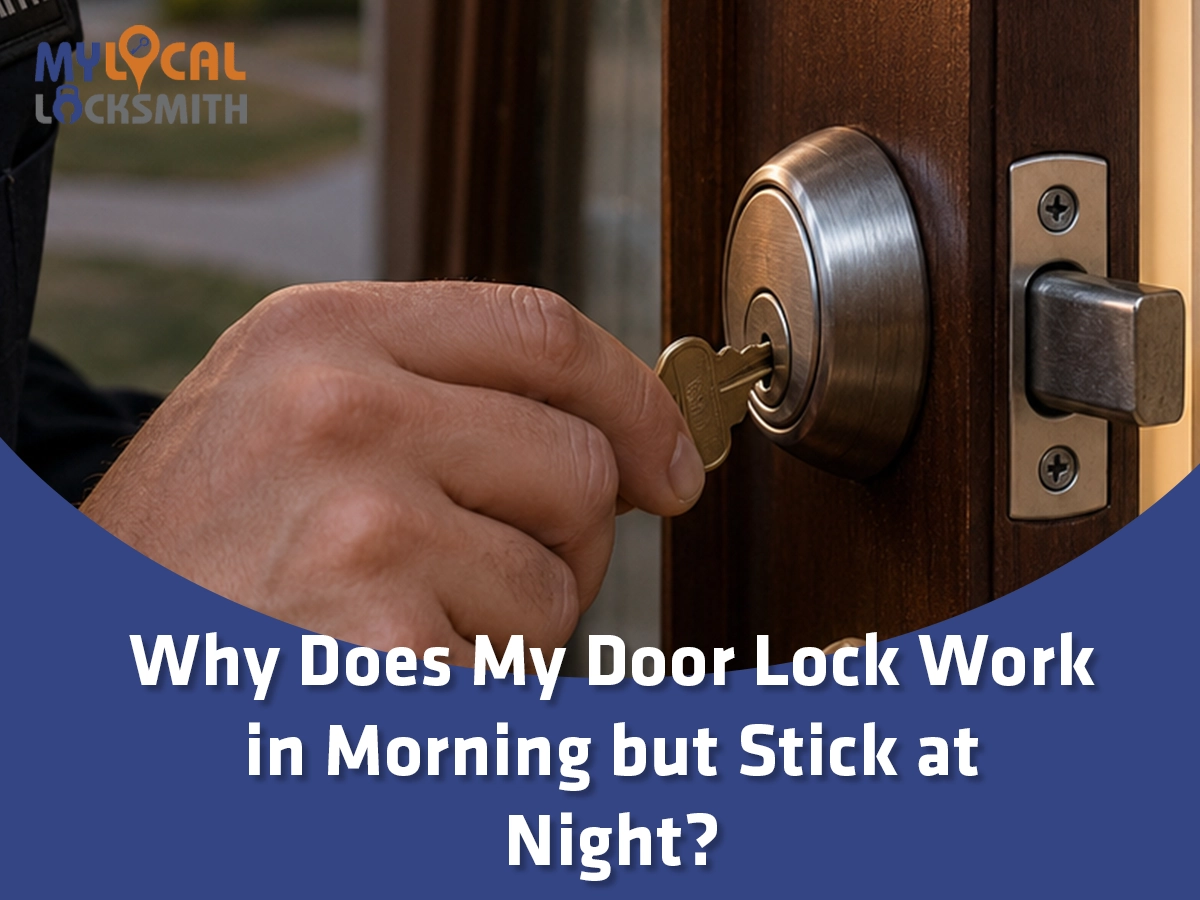
Why Does My Door Lock Work in Morning but Stick at Night: The Real Risk
Wood does not swell equally in every direction when its moisture level changes. That surprising fact can alter a lock’s fit.
AI Overview
A lock that works early but sticks later usually faces changing pressure, alignment, or friction. Sun, heat, moisture, and indoor cooling can shift the door slightly. Weather seals may also press harder after the door warms. Loose hinges can let a heavy door sag as parts move. The key test is simple. Operate the lock with the door open, then repeat with it closed. Smooth action while open points toward alignment. Resistance in both positions points toward the key, cylinder, bolt, or inner lock. Never force the key or bolt. Note the time, weather, and needed door pressure. Then ask a qualified locksmith to correct the cause without weakening the entry.
When people ask, “why does my door lock work in morning but stick at night,” they often blame the cylinder. Yet timing offers a useful clue. The whole door system may change during the day.
A door lock depends on many parts meeting in one narrow path. The door, frame, hinges, strike, bolt, and seals all matter. A small shift can add enough drag to stop a smooth turn.
This issue deserves attention before the lock stops working. Repeated force can bend a key or harm small lock parts. It can also hide a door security fault.
Our diagnostic view is simple. Timing is a clue, not proof.
- First, test the lock before changing any hardware.
- Also, stop if the key twists, catches, or needs heavy force.
The Hidden Reason a Door Lock Changes by Night
Morning and night do not affect every entry in the same way. The issue may follow sun exposure, moisture, cooling, or use. Therefore, “night” describes the symptom time, not one fixed cause.
A west facing door may absorb strong afternoon sun. The door skin and nearby frame can warm at different rates. Later, the bolt may meet a changed strike position.
Wood also responds to moisture in nearby air. The USDA Wood Handbook covers moisture relations, shrinkage, and dimensional change. It shows why wood movement is not uniform.
Metal parts also change size with temperature. However, the door and frame often create the larger alignment effect. Paint, seals, and hinge movement can add more resistance.
- Heat may change the fit after hours of direct sun.
- Moisture may change a wood door or frame over time.
- Cooling may alter pressure between the door and weather seal.
- Daily use may reveal loose hinges late in the day.
The Fast Door Open Test Gives a Powerful Clue
The safest first test needs no tools. Open the door fully and turn the key or thumb turn. Watch the bolt move through several full cycles.
Next, close the door gently without pushing or pulling it. Try the same action again. Compare the effort, sound, and travel.
If the lock works open but sticks closed, the cylinder probably is not the first suspect. The bolt may rub the strike. Door pressure may also load the bolt.
If it sticks in both positions, the fault may sit inside the hardware. A worn key, dirty keyway, damaged cylinder, bent bolt, or tight mounting screw could be involved.
Now test door pressure without forcing the lock. Gently push the door inward while turning the thumb turn. Then pull it slightly and repeat.
An easier turn during either test points toward fit or seal pressure. Needing to lift the door can point toward hinge sag. These signs guide repair, but they do not prove one cause.
Schlage also lists temperature, moisture, weather stripping, strikes, and hinges in its door alignment guidance. Its advice confirms that the lock and door must work as one system.
- Smooth while open and rough while closed suggests alignment.
- Rough while open and closed suggests lock or key trouble.
- Easier while pushing suggests pressure at the frame or seal.
- Easier while lifting suggests sag or low bolt contact.
Temperature and Moisture Can Shift the Door
Weather effects are often real, but they need careful wording. Heat does not automatically mean the lock itself expanded enough to jam. The complete opening may have shifted.
A wood door can take in or release moisture. Its width and thickness can change more than its length. Therefore, the latch edge may sit closer to the frame.
A metal door behaves differently. Its skin, core, frame, and hardware can warm at different rates. The frame can also move as the building warms.
Glass panels may add weight and heat. Dark finishes can absorb more sun than light finishes. However, only an onsite check can show which factor matters.
Grapevine homes can face hot sun, rain, and cooled indoor air. That mix may reveal a weak fit. It does not mean every evening lock issue comes from humidity.
Track the symptom for several days. Note rain, strong sun, indoor cooling, and the time resistance starts. This record can turn a vague complaint into useful evidence.
For more preventive context, read these lock maintenance tips for homes and businesses. Good care helps reveal changes before they become failures.
- Note which side of the home receives late sun.
- Check whether the issue follows rain or muggy air.
- Look for fresh rub marks near the latch edge.
- Record whether the door also becomes hard to close.
Loose Hinges and a Misaligned Strike Create Friction
Hinges hold the door at a precise height and angle. A loose top hinge can let the latch side drop. Then the bolt may scrape the lower strike edge.
Open the door and inspect each hinge. Look for loose screws, movement, rust, bent leaves, or a widening gap. Do not remove hardware during a quick safety check.
Next, inspect the strike plate with a bright light. Fresh shiny marks can show where the bolt rubs. Paint dust or metal dust may provide another clue.
The latch and deadbolt can affect each other. A lower latch that pulls the door too far inward can load the deadbolt. Weather stripping may create similar pressure.
Do not file the strike as a first response. Removing too much metal can reduce support around the bolt. It may also hide a sagging door.
A professional can check the door reveal, hinge support, strike location, and bolt pocket. The correct repair may involve an adjustment instead of lock replacement.
Our guide to common lock problems and prevention explains other warning signs. Use those signs alongside the time pattern.
- Look for uneven gaps around the closed door.
- Check for loose hinge screws without taking the hinge apart.
- Find scrape marks on the bolt or strike.
- Notice whether the door needs a push to latch.
Weather Stripping Can Become a Silent Night Problem
Weather stripping saves energy and blocks drafts. However, thick or poorly placed material can press the door away from its normal position. Heat can make that pressure more noticeable.
Look along the latch side while the door closes. The seal should compress evenly. A folded section near the deadbolt can shift the door just enough.
Also inspect the bottom sweep. A tight sweep can resist full closing. That force may twist the door slightly against the frame.
Do not cut or remove a seal without finding the true contact point. A gap can invite water, dust, noise, and insects. It can also hurt comfort.
Instead, note where pressure changes the lock action. A locksmith or door professional can choose a safe correction. The aim is smooth bolt travel and a useful seal.
- Check for a seal that folds near the deadbolt.
- Watch whether the door springs back after closing.
- Test gentle inward pressure while turning the lock.
- Preserve the seal until the source is confirmed.
The Key or Cylinder May Be the Real Cause
Timing can distract from a worn key or cylinder. A lock may simply receive more use by night. Dirt and wear can also cause random trouble that seems tied to time.
Compare the main key with a good spare. A bent, cracked, or worn key should not be trusted. Never straighten a key inside the lock.
Insert the key slowly while the door stays open. Note any catch at one depth. Then turn it gently. Rough action in this position points away from the strike.
The cylinder may contain worn pins, debris, corrosion, or damaged parts. The tailpiece can also bind. Tight mounting screws may distort some lock assemblies.
Avoid household oil and random sprays. Some products hold dust or harm finishes. Follow the lock maker’s exact care guide or ask a locksmith.
Most importantly, never force a jammed lock. This guide about forcing a jammed lock explains the risks. A broken key can turn a simple repair into an urgent entry problem.
- Stop using a key with a crack or deep bend.
- Compare action with a trusted spare key.
- Test the cylinder only while the door is open.
- Use only care products approved for that lock.
Smart Locks Need Free Bolt Travel Too
A smart lock adds a motor, gears, batteries, sensors, and software. Still, its bolt must enter the strike without heavy resistance. Electronics cannot correct a moving door.
A motor may fail only at night because the bolt faces more load then. The keypad may beep or show an error. Batteries may seem weak during the hard cycle.
First, use the manual thumb turn with the door open. Then test it closed. If resistance appears only when closed, inspect alignment before blaming software.
Kwikset lists deadbolt and strike misalignment among causes of binding in its SmartCode troubleshooting guide. It also advises checking whether the door needs pushing, pulling, or lifting.
Replace batteries with the maker’s recommended type when needed. Yet do not treat fresh batteries as a cure for bolt drag. Extra motor strain can return.
Repeated failed cycles may wear gears or drain batteries faster. Therefore, switch to manual use if the maker allows it. Arrange service before the lock stops.
- Test manual movement before resetting the device.
- Check alignment before replacing the whole smart lock.
- Follow the maker’s battery and setup instructions.
- Stop repeated cycles when the motor sounds strained.
Safe Checks You Can Do Tonight
First, test the lock open and closed. Next, observe the door gap. Then note the pressure that changes the result. This order keeps the evidence clear.
Use a removable mark on the bolt only when the finish allows it. A light transfer mark can reveal contact. Never put material inside the cylinder.
Check screws with the correct driver. A visibly loose hinge screw may need attention. However, overtightening can strip wood or distort hardware.
Take photos of rub marks and uneven gaps. Record the hour and weather. These details help a professional compare the morning and evening conditions.
Stop if the door supports fire protection, shared building access, or special exit hardware. Those systems may require specific service rules.
An illustrative example shows the value of this process. Imagine a deadbolt that turns freely with the door open. It binds closed after late sun.
Gentle inward pressure makes it work. That pattern supports a fit problem, but does not prove the exact repair. Inspection may find a seal, strike, or hinge issue.
- Test open, closed, pushed, and gently pulled.
- Photograph contact marks and door gaps.
- Note sun, rain, temperature, and time.
- Stop before any step could weaken security.
Dangerous Fixes That Can Make the Problem Worse
Force is the fastest way to turn resistance into damage. A key can snap inside the cylinder. A thumb turn can bend an inner part.
Do not hammer the key or bolt. Do not use pliers for extra turning force. Those actions remove the feedback that warns you to stop.
Avoid grinding or widening the strike without a full alignment check. The bolt needs proper support and depth. A larger opening is not always a safer opening.
Do not soak the cylinder with cooking oil or thick grease. Dust can collect in residue. The wrong product may also affect coatings or nearby electronics.
Avoid moving several parts at once. If the issue improves, you will not know why. If it worsens, the original alignment may be lost.
Finally, do not ignore a bolt that stops short. A door that looks locked may not have full bolt engagement. Check the result without forcing it.
- Never add leverage to a resistant key.
- Never remove strike material before diagnosis.
- Never mix unapproved cleaners and lubricants.
- Never accept partial bolt travel as secure.
When Expert Repair Is the Smart, Secure Choice
Call for help when resistance grows, the key bends, or the bolt will not extend fully. The same applies after visible door movement.
Professional diagnosis should start with the symptom, not a sales choice. The technician can compare open and closed action. Then they can inspect the full door system.
Possible repairs include hinge correction, strike adjustment, seal correction, cylinder service, rekeying, or lock replacement. The right choice depends on measured wear and fit.
Replacement makes sense when parts are badly worn, damaged, or unsuitable. However, a new lock will still bind against a bad strike. Alignment must be corrected too.
If security feels doubtful, review these signs that home locks need replacement. Then seek an inspection that separates repair needs from upgrade choices.
A qualified locksmith should explain what caused the drag. They should also confirm smooth action and full bolt travel after service. Ask to see the corrected contact path.
- Seek help after broken key warning signs appear.
- Call when the bolt cannot reach full travel.
- Request both lock and door alignment checks.
- Confirm the repair works at the problem time.
Frequently Asked Questions
Why does my deadbolt turn easily when the door is open?
Smooth action with the door open suggests the lock can move without frame pressure. When it binds only after closing, the bolt may rub the strike. A tight seal or sagging hinge may also shift the door. This test gives a strong clue, but an inspection must confirm the exact cause.
Can hot weather make a door lock hard to turn?
Hot weather can change how the door, frame, seals, and hardware fit together. Direct sun may warm parts unevenly. Moisture can also affect wood. The lock itself is only one part of that system. Therefore, compare open and closed operation before deciding that heat damaged the cylinder.
Why must I push or pull the door to lock it?
Pushing or pulling changes the bolt’s position against the strike. If that motion makes turning easier, alignment or seal pressure is likely involved. Loose hinges, frame movement, or a shifted strike may contribute. Avoid making force part of your daily routine, since repeated drag can damage the lock.
Should I lubricate a lock that sticks only at night?
Lubrication may help some internal friction, but it will not correct door misalignment. First, test the lock while the door is open. If it moves freely, lubricant may miss the real cause. Use only the product and method approved by the lock maker. Never flood the keyway with household oil.
When should a sticking door lock be replaced?
Replacement may be wise when the cylinder is worn, the bolt is damaged, or security is doubtful. Yet a new lock cannot solve a shifted door or strike. A locksmith should test alignment and hardware condition first. This step helps avoid needless cost and makes sure the final repair restores full bolt travel.
Conclusion: Solve the Cause Before the Lock Fails
If you ask, “why does my door lock work in morning but stick at night,” start with the whole door. Daily heat, moisture, pressure, and use can reveal a weak alignment.
The door open test provides the best first clue. Smooth open action points toward the frame, strike, hinges, or seals. Rough action in both positions points toward the lock or key.
Do not force the key, guess at the strike, or hide resistance with random spray. Instead, record the pattern and protect the entry.
My Local Locksmith – Grapevine can inspect the lock, bolt path, strike, hinges, and door pressure. The goal is a sound repair based on the actual cause.
- Get a clear diagnosis before replacing hardware.
- Restore smooth movement and full bolt travel.
- Ask for practical care steps after the repair.
Contact us at
Address: 1021 S Main St #104, Grapevine, TX 76051
Main Phone: 817-952-5256
Website: http://mylocallocksmithtx.com/my-local-locksmith-in-grapevine/