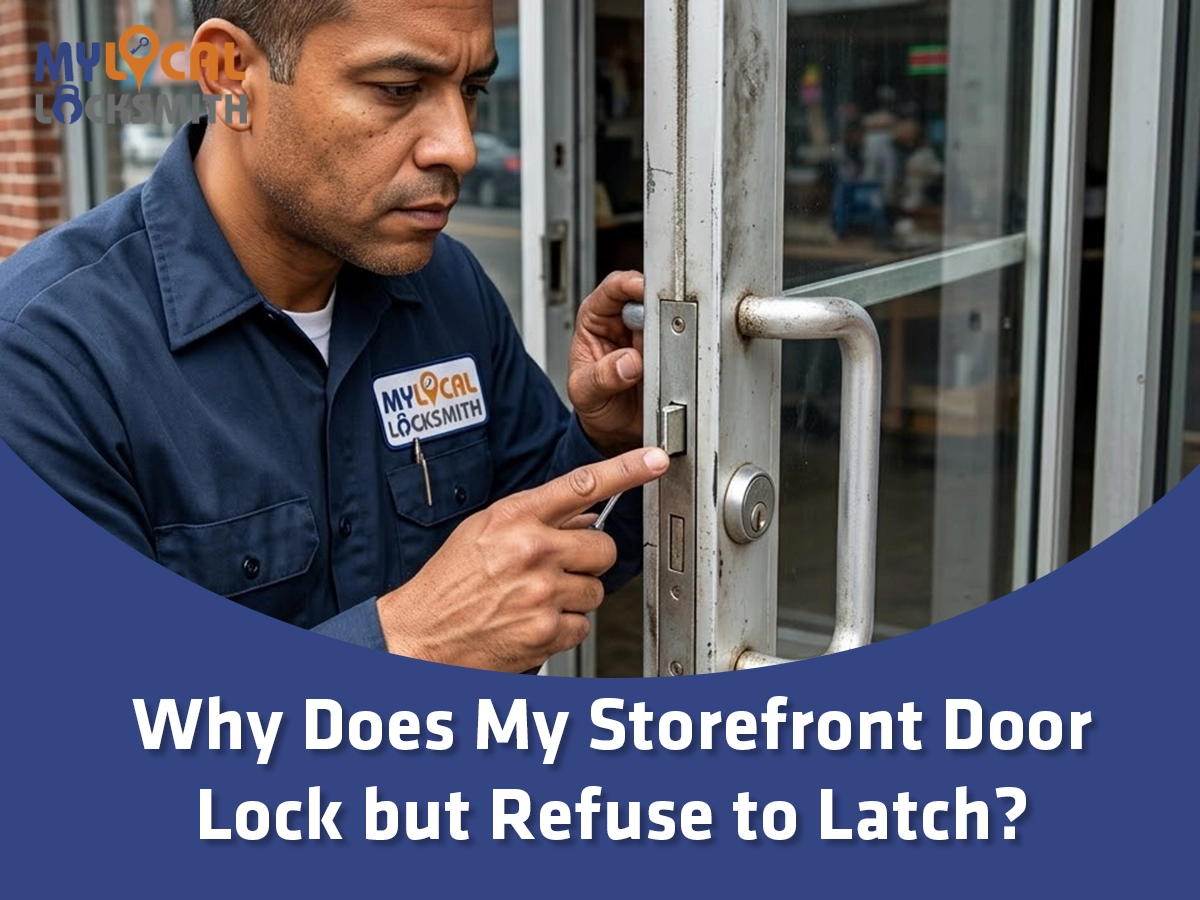
Why Does My Storefront Door Lock but Refuse to Latch?
Here is the surprising fact. A storefront door can lock correctly while its latch fails because those actions use different parts.
AI Overview
A storefront door that locks but refuses to latch usually has an alignment, closing, or latch problem. The key may move the lock bolt correctly while the spring latch misses its strike. Common causes include a shifted strike, worn pivots, a sagging door, weak latch return, or a poorly set closer. Wind, air pressure, debris, and access control parts can also keep the door from reaching its final position. First, test the latch with the door open. Then close the door slowly and watch where the latch meets the strike. If the latch works while open, alignment or closing force is likely involved. If it stays retracted while open, the hardware may need repair. Do not force, file, bend, or disable commercial exit hardware. A professional should inspect any fire rated, panic equipped, glass, or electronic opening.
That split causes confusion. The owner turns a key and sees the bolt move. Yet the door still swings open after someone leaves.
The problem may look small during business hours. After closing, it can leave the entry unsecured or force staff into an unsafe workaround.
My view is simple. Treat the whole opening as one system. The door, pivots, closer, latch, strike, frame, and lock must agree.
Do not begin by replacing the cylinder. A working key cylinder may have nothing to do with the failed latch.
- Test the latch and lock as separate functions.
- Stop using force as part of normal closing.
- Check whether the door stays shut without the deadbolt.
- Arrange service before staff invent a risky workaround.
The Lock and Latch Do Different Jobs
People often use lock and latch as the same word. On many storefront doors, they describe separate actions.
The latch catches automatically when the door closes. It holds the door in the frame until the handle or exit device releases it.
The lock controls entry. A key, thumb turn, lever, cylinder, or access device may block or permit the hardware.
Some storefront doors use a hook bolt or deadbolt instead of a spring latch. Others use mortise locks, exit devices, or electric strikes.
Therefore, the exact hardware matters. A key can throw a deadbolt even when the door never closes far enough for its latch.
This guide to commercial door lock hardware explains common parts. Use the names to describe the symptom clearly.
- Latching should happen as the door closes.
- Locking should control who can enter.
- A working deadbolt does not prove a working latch.
- Hardware type changes the correct repair.
A Safe Open Door Test Reveals the First Clue
Open the storefront door and locate the latch. Press the handle or push bar. Watch whether the latch retracts and returns.
Release the hardware fully. The latch should move back to its normal position. Slow, partial, or absent return suggests internal wear or binding.
Next, close the door slowly without slamming it. Watch the latch approach the strike. Listen for rubbing and note where contact begins.
If the latch works open but misses while closing, alignment becomes the stronger suspect. The closer may also stop short.
If the latch fails while open, the issue may involve the latch, return spring, linkage, lock body, or exit device.
Write down the result. A clear symptom saves time and reduces guesswork during service.
- Test latch movement while the door is open.
- Close the door slowly and watch the strike contact.
- Note whether gentle pressure changes the result.
- Stop if glass, hardware, or the frame moves.
Strike Misalignment Is a Common Cause
The strike receives the latch. If those parts no longer meet, the latch may hit metal instead of entering the pocket.
Look for fresh bright marks on the strike. Also check the latch edge for scraped finish, metal dust, or an uneven wear line.
Schlage lists hinges, frame movement, weather seals, and strikes in its door latching guidance. The basic lesson applies beyond residential doors.
Do not enlarge the strike opening at once. Filing can hide the real cause. It can also reduce useful contact around the latch.
A technician should find why alignment changed. Moving the strike without correcting a worn pivot may create another failure soon.
The repair might involve the strike, door position, pivots, lock body, or frame. The mark only shows contact, not the whole cause.
- Look for fresh rub marks before touching hardware.
- Check whether the door gap looks even.
- Find the cause before moving the strike.
- Confirm full latch engagement after repair.
Worn Pivots Can Let a Storefront Door Drop
Many aluminum storefront doors use pivots instead of common leaf hinges. Those pivots carry the glass door’s weight and guide its swing.
Wear can let the door settle. Then the latch arrives below its strike. The lower edge may also scrape the threshold.
Do not lift a heavy glass door for testing. Do not loosen pivots without proper support. Glass and aluminum can be damaged quickly.
A dropped door may still lock if someone pushes it into place. That does not make the opening sound. It only masks alignment.
The correct repair may involve pivot service, door position, fasteners, or damaged frame parts. The strike is not always the root cause.
After repair, the door should swing freely, align evenly, and latch without a hard shove.
- Check for uneven gaps and threshold rubbing.
- Listen for scraping during the full swing.
- Avoid lifting or loosening a glass door.
- Repair the support problem before adjusting the strike.
The Door Closer May Stop Before the Final Catch
A storefront closer controls how the door returns. It must bring the latch through the final part of closing without creating a slam.
Closer adjustment is not a simple speed choice. Different controls may affect sweep, final closing, back pressure, or delayed action.
Turning the wrong valve can make the door unsafe or damage the closer. Too much force can also make opening difficult.
Look for oil around the closer body or cover. A leak may indicate a failed seal. Do not add oil to a sealed closer.
Wind and indoor air pressure can overcome the final closing force. Yet increasing force without measuring the opening may create another problem.
A technician should balance reliable latching with safe, usable opening. That balance matters for customers, staff, and accessible entry.
- Note whether the door stops during the final few inches.
- Look for oil, loose arms, or sudden speed changes.
- Do not turn closer valves without the correct instructions.
- Test opening force and latching after any adjustment.
The Latch or Exit Device May Be Worn
Sometimes the door and strike align well, but the latch does not return fully. A worn spring or internal link can cause that failure.
Press and release the lever or push bar while the door is open. The latch should respond at once and return cleanly.
If the push bar stays partly pressed, the latch may stay retracted. Dirt, wear, loose parts, or a damaged return can be involved.
Some exit devices can be set to hold the latch back during approved times. That feature is often called dogging.
However, not every door may use that feature. Fire rated openings can have special limits. Never copy another door’s setup.
Do not take apart an exit device during business hours. A small mistake can leave the door unsecured or affect safe exit.
Our guide to push bars and panic devices covers their purpose. The right test depends on the exact device.
- Check whether the latch returns after release.
- Watch for a push bar that stays partly depressed.
- Do not change dogging on an unknown opening.
- Report failed fire door latching at once.
Wind, Air Pressure, and Weather Can Add Resistance
Storefront doors face wind, heat, rain, dirt, and indoor pressure. Those conditions can expose a weak adjustment that seemed fine earlier.
Strong wind can slow the door or pull it past the frame. Indoor air pressure can resist the final closing movement.
Weather seals and door sweeps can also drag. A new sweep may press too hard against the threshold.
Heat can change how metal parts fit. Frame movement may also shift the strike. Yet weather alone should not become the automatic answer.
Check the pattern. Does the failure happen only with air systems running? Does it follow rain, strong sun, or a certain wind direction?
Document the time and conditions. Those details can help a technician reproduce the failure instead of guessing.
- Note wind, rain, heat, and air system use.
- Check for threshold debris and seal drag.
- Test the door at the problem time.
- Treat repeat failure as a real fault.
Electric Strikes and Access Control Add More Variables
An access controlled storefront may use an electric strike, electrified lock, sensor, reader, or door position switch. Each part changes diagnosis.
The mechanical latch still needs to align with many electric strikes. If the door drops, the latch can bind against the powered part.
A strike may release for entry yet fail to hold after closing. The issue could be mechanical, electrical, or both.
Listen for a release sound after a valid credential. Then watch whether the door closes and catches. Do not pry the strike.
Do not assume the reader caused the problem. A card can work perfectly while the closer leaves the latch outside the strike.
A qualified provider should test a normal credential, failed credential, free exit, closing, latching, and alarm response where applicable.
- Separate credential release from physical latching.
- Check for approved hold open schedules.
- Never pry or bend an electric strike.
- Test the complete entry and exit cycle.
A Door That Will Not Latch Can Be a Safety Issue
A failed latch is not only an inconvenience. The door may not stay secure after customers leave. It may also affect a rated opening.
Commercial entries must support safe use. The United States Access Board explains requirements for entrances, doors, and gates. These include several door and hardware factors.
Never tie a door shut, block an exit, or disable panic hardware. A temporary security idea can create a larger life safety problem.
If the door will not secure, control the area and follow the business emergency plan. Use another approved entrance only when permitted.
A fire rated door that fails to latch needs prompt attention. Do not wedge it open or hold the latch back for convenience.
Our commercial door compliance guide offers more planning context. A site review must still address the exact opening.
- Keep required exit paths clear.
- Escalate failed rated door latching promptly.
- Avoid makeshift chains, wedges, and ties.
- Coordinate security with safe entry and exit.
Quick Fixes Can Create a Bigger Failure
Do not tape a latch back. Do not jam cardboard into the strike. Do not bend a lever or push bar.
Avoid random sprays. The wrong product can hold grit or affect finishes. Sealed closers should not receive added oil.
Do not file the strike until alignment and latch return are checked. Removing material cannot repair a dropped door.
Do not increase closer force blindly. The door may become harder to open. It may also slam customers or strain the frame.
Most importantly, do not defeat exit hardware after closing. A secure business still needs lawful, safe egress for anyone inside.
Call for help when the door needs force, glass shifts, the closer leaks, or exit hardware fails.
- Stop slamming or lifting the door to make it catch.
- Leave exit devices and closers intact.
- Use only approved care products.
- Protect the area until proper service arrives.
An Illustrative Arlington Storefront Example
Consider this made up example. It shows the diagnosis path. It does not describe a real customer, job, or security event.
An Arlington shop has an aluminum glass entry. The key turns its deadbolt. However, the door bounces open unless staff push hard.
The latch moves and returns while the door is open. That result makes an internal latch failure less likely.
Slow closing reveals the latch hitting below the strike opening. The lower door edge also makes a faint scrape near the threshold.
The technician checks the pivots, frame, closer, latch, and strike. The repair scope follows what those checks confirm.
After service, the door closes from normal use and catches without a shove. The deadbolt also enters its strike without pressure.
- Confirm the latch works with the door open.
- Watch where it meets the strike.
- Check door support before moving metal.
- Test both latching and locking after repair.
Repair, Adjust, or Replace the Hardware?
Adjustment makes sense when sound parts no longer align. The work may involve the strike, closer, pivots, or door position.
Repair makes sense when a serviceable assembly has a known failed component. Compatibility and manufacturer guidance still matter.
Replacement makes sense when parts are worn, leaking, damaged, obsolete, or unsuitable for the opening. It should follow diagnosis.
Do not replace the lock cylinder merely because the door will not latch. The cylinder may work perfectly.
Texas businesses can review the Department of Public Safety TOPS license search guidance. Verify the proper provider for security work.
Our article on lock maintenance for property and office owners can help with future checks. Keep a simple service record.
- Adjust sound parts that have shifted.
- Repair known failures when safe parts remain usable.
- Replace hardware that is worn or unsuitable.
- Verify closing, latching, locking, and exit.
Frequently Asked Questions
Why does my storefront door latch only when I push it?
Extra pressure may move the latch into a misaligned strike or overcome seal, sweep, wind, or closer resistance. That points toward fit or closing force, but it does not prove one cause. Stop making the hard push part of daily use. Repeated force can damage the latch, strike, pivots, frame, or glass.
Can a door lock even if the latch does not catch?
Yes. Some doors use a separate deadbolt or hook bolt that the key can move after staff position the door. The spring latch may still miss its strike. That means locking and automatic latching are not working as one system. Both functions should be tested because a turned key alone does not confirm reliable closure.
How do I know whether the closer causes the problem?
Watch the final part of closing. A door that slows, stalls, or bounces before the latch catches may have closer, pressure, drag, or alignment trouble. Look for oil and loose movement without touching pinch points. Do not adjust valves blindly. A technician should balance full latching with safe opening force and controlled speed.
Should I file the strike when the storefront latch misses?
Not before finding why the parts moved. A worn pivot, loose frame, dropped door, or damaged latch can create the same strike mark. Filing may hide the cause and reduce good latch contact. First test latch return, door gaps, pivots, closer action, and strike position. Then choose the smallest sound correction.
When is a storefront door latch problem an emergency?
Seek prompt help when the door cannot secure, exit hardware fails, glass shifts, or the closer leaks badly. Act quickly after forced entry damage. Keep exits clear and follow the business safety plan. Do not chain, wedge, tape, or disable the opening.
Conclusion: Fix the Cause Before Closing Time
Why does my storefront door lock but refuse to latch? The key usually controls one part while alignment or closing affects another.
Start with the open door test. Then watch the latch meet the strike. That simple order separates hardware return from door fit.
Do not slam, file, tape, or force commercial hardware. Those shortcuts can hide the fault and create new safety concerns.
My Local Locksmith – Arlington can inspect the full opening and explain the confirmed cause. The goal is reliable latching, locking, and safe use.
- Test the latch and lock separately.
- Inspect the door, strike, pivots, closer, and hardware.
- Repair the cause instead of masking contact.
- Confirm smooth entry, secure closure, and free exit.
Contact us at
Address: 805 Washington Dr a1, Arlington, TX 76011
Main Phone: 682-253-1593
Website: http://www.mylocallocksmithtx.com/