What Is Your Door Telling You?
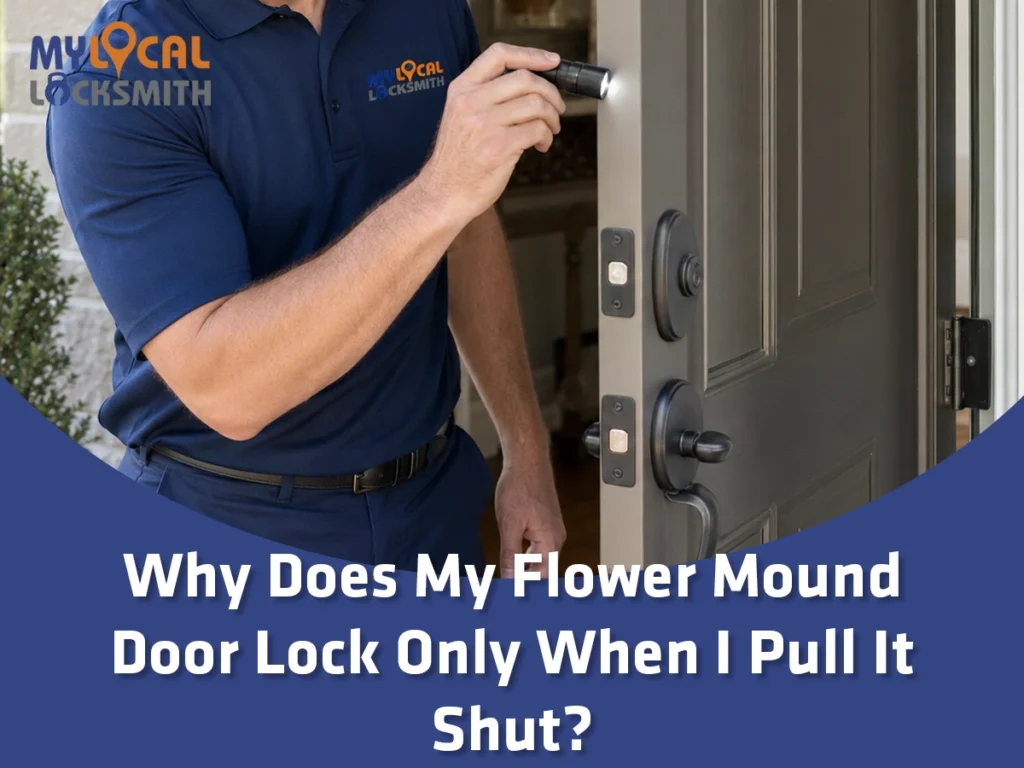
Pulling the door is acting like a manual alignment tool. Your hand moves the latch or deadbolt into the one position where it can enter the strike. So, why does my Flower Mound door lock only when I pull it shut? Usually, the door, strike, hinges, or weather seal is keeping the bolt slightly out of line.
AI Overview
A door that locks only while you pull it is usually under alignment pressure. The latch or deadbolt does not meet its strike opening naturally. Pulling the door shifts the slab enough for the bolt to enter. Common causes include loose hinges, door sag, a misplaced strike, thick weather seals, frame movement, or a shallow bolt pocket. First, compare the lock with the door open and closed. Smooth open door operation points toward the door or frame. Binding in both positions may involve the lock itself. Avoid forcing the key or cutting the frame before the exact contact point is known.
- First, test the latch and deadbolt with the door open.
- Next, close the door gently and repeat without pulling, pushing, or lifting it.
This problem often starts small. Yet the extra pull can become a daily habit. That habit hides wear, adds stress, and delays the repair until the lock jams.
Why Does Pulling the Door Make the Lock Work?
The door hangs within a frame and pivots on its hinges. The latch and deadbolt must meet matching openings in that frame. Even a small shift can make metal touch metal or wood.
When you pull, you change the door’s position and pressure. The latch may move past a strike edge. The deadbolt may finally line up with its pocket. However, your hand is correcting the symptom for one moment.
- Pulling may move the bolt toward the center of the strike opening.
- Pulling may also compress or release pressure from the weather seal.
What Does the Open Door Test Reveal?
Open the door and operate the lock several times. Turn the key outside, then use the thumb turn inside. The bolt should extend fully and return without grinding, jumping, or heavy force.
Now compare that feel with the door closed. If resistance appears only after closing, the cylinder may be fine. The likely problem moves toward the strike, hinges, seal, or frame.
Kwikset recommends this same open and closed comparison in its official door alignment guidance. Its support page says closed door resistance can point to bolt and strike misalignment.
- Smooth movement while open helps isolate the lock from the frame.
- Resistance in both positions points back toward the lock, bolt assembly, or mounting.
Is the Latch, Deadbolt, or Both Causing Trouble?
The spring latch holds the door closed when it enters its strike. The deadbolt provides a separate locking bolt. These parts often have different strike openings, so one can align while the other does not.
Test them separately. First, close the door and check whether the latch catches without pulling. Next, leave the knob unlocked and test only the deadbolt. Notice which action needs help.
- A failed latch may let the door spring open before the deadbolt is used.
- A smooth latch with a stiff deadbolt points toward the upper strike or bolt pocket.
How Does Strike Plate Misalignment Cause the Problem?
The strike plate surrounds the opening that receives the latch or deadbolt. If it sits too high, low, inward, or outward, the bolt can strike an edge. Pulling the door may give it the final fraction of movement.
Look for clean metal marks, chipped paint, or a bright scrape around the opening. Those signs show contact, but they do not explain why the alignment changed. The strike may be wrong, or the door may have moved.
Schlage discusses this problem in its guide for a door that will not latch. The guide covers strike contact, door sag, weather seals, and bolt pocket depth.
- Note whether the bolt touches the top, bottom, front, or rear of the strike.
- Check whether the strike rocks, shifts, or sits above the frame surface.
Could Loose Hinges Be Letting the Door Sag?
Yes. A heavy door places steady load on its hinges. Loose screws, worn hinge parts, or weak frame attachment can let the latch side drop. Then the latch or bolt may meet the bottom of its strike.
Watch the door while someone slowly opens and closes it. Look for hinge movement, a changing gap, or the slab rising when pulled. A narrow top gap and wide bottom gap can also support a sag diagnosis.
- Check each hinge for visible movement, missing screws, and loose leaves.
- Compare the gap above the door from the hinge side to the latch side.
Can Weather Seals Hold the Door Away From the Frame?
Yes. Weather seals should reduce air and water entry while allowing the door to close correctly. A thick, folded, new, or misplaced seal can hold the latch side away from the stop.
Pulling may compress that seal enough for the deadbolt to enter. You may also notice the problem after new seal work or during changing weather. Still, do not remove the seal without checking the complete fit.
- Inspect the perimeter for folded, torn, hardened, or uneven seal material.
- Note whether pressure is strongest near the latch, deadbolt, top, or bottom.
Why Can Heat, Moisture, and House Movement Change the Fit?
Wood doors and frames can change slightly as moisture and temperature change. A building can also settle over time. These movements may reveal an opening that had almost no alignment margin.
Seasonal timing is useful evidence. Does the problem appear during humid periods or after strong heat? Does it improve later? Record the pattern rather than guessing from one difficult evening.
- Compare the door gap and locking feel at different times when the problem changes.
- Check for rubbing at the top, latch edge, threshold, and frame stops.
Could the Bolt Pocket Be Too Shallow?
Yes. The deadbolt needs enough clear space to reach its designed full travel. A shallow pocket can stop the bolt even when the strike opening looks centered. Pulling the door may change the angle just enough to reduce contact.
Compare the thumb turn’s final position with the door open and closed. If it stops early only while closed, the pocket may be blocked or shallow. Paint, debris, damaged wood, or a wrong strike can also reduce space.
- Check whether the bolt reaches the same final position in both tests.
- Look for a mark at the back of the pocket or debris inside it.
Use the instructions for the exact lock model before changing pocket depth. A general measurement should not override the manufacturer’s required preparation.
Can Loose or Tight Lock Hardware Create Binding?
Both conditions can cause trouble. Loose trim may let the cylinder or thumb turn shift. Excessively tight mounting can pinch parts and raise turning force. An off center installation can also place the bolt under side pressure.
The open door test helps again. If the lock binds while open, inspect the mounting and bolt assembly. If it works freely while open, frame alignment remains the stronger lead.
- Watch the exterior cylinder and interior trim while the lock operates.
- Look for rocking, uneven gaps, loose screws, or a faceplate that rubs the frame.
Do not tighten every screw as hard as possible. Firm and even mounting is the goal. More force is not the same as better installation.
Why Can This Problem Be Hard on a Smart Lock?
A smart deadbolt motor must move the same bolt that a person turns by hand. Strike pressure adds load. As a result, the motor may stall, report a jam, make extra noise, or use batteries faster.
Test the smart lock manually when the product allows it. Compare open and closed operation. If the bolt moves freely while open, changing batteries alone will not correct door pressure.
- Listen for repeated motor attempts, slowing, or a jam message.
- Check manual bolt travel before blaming the keypad, app, or wireless connection.
Electronic features do not remove mechanical needs. The door still has to align. That is why an alignment check belongs early in any smart lock diagnosis.
What Can a Homeowner Check Without Damaging the Door?
Use normal hand pressure, bright light, and careful comparison. Take photos of the strike marks and door gaps. Record whether you must pull, push, or lift the door. Each movement points to a different contact pattern.
You can also hold the door near its edge and check for obvious hinge movement. Stop if the door feels unstable. Heavy doors can cause injury or damage when hinge support fails.
- Record what changes between open and closed lock operation.
- Note the direction of force, contact marks, seal pressure, and hinge movement.
Our guide to common lock problems and prevention can help you separate a temporary symptom from growing wear. However, do not take the lock apart unless you can restore it safely.
What Should You Avoid While Troubleshooting?
Avoid forcing the key, slamming the door, or leaning harder each day. These actions can bend the key, damage the bolt, loosen the strike, or split weak frame material.
Also, avoid moving the strike before you know why contact exists. A door that sagged may continue moving after the strike follows it. Random cutting can leave an oversized opening with poor support.
- Do not file the key, bend the bolt, or grind the strike without a clear diagnosis.
- Do not use lubricant to hide pressure between the bolt and frame.
If the bolt is already jammed, read why you should never force open a jammed lock. Stop before the key twists or the thumb turn feels ready to break.
What Do Three Realistic Examples Show?
These examples are illustrative, not customer case studies. They show how the same complaint can come from different parts of the opening.
First, a deadbolt moves smoothly while open but hits low when closed. Pulling and lifting help. Hinge sag becomes a strong lead. Second, the latch works, but the deadbolt stops at the pocket rear. Depth needs checking. Third, both bolts resist while open. Lock mounting or internal wear becomes more likely.
- Example one points toward door position before strike movement.
- Examples two and three separate pocket limits from lock based resistance.
The useful lesson is simple. “I have to pull it” is a symptom, not a complete diagnosis. The open door test and contact marks narrow the cause.
When Is a Small Adjustment Enough?
A focused adjustment may be enough when the hardware is sound and the cause is clear. The repair might restore hinge support, correct strike position, or relieve improper seal pressure. The final result must keep the door secure and well sealed.
The completed lock should work without a special move. It should also reach full bolt travel. If the adjustment fixes motion but weakens the strike, the repair is incomplete.
- Adjust only after identifying the contact point and the reason it changed.
- Test the latch, deadbolt, door gap, and seal after the correction.
Routine care also helps small changes get noticed earlier. Our guide on why lock maintenance matters explains how inspection can prevent avoidable failure.
When Should the Lock or Door Hardware Be Replaced?
Replace hardware when damage, severe wear, corrosion, broken parts, or poor compatibility prevents a sound repair. A badly cut door or damaged frame may also need work beyond the lock.
Do not replace a healthy lock just because the door sags. Likewise, do not keep a failing cylinder just because alignment also needs correction. Both problems can exist at once.
- Keep serviceable hardware when alignment work restores reliable operation.
- Replace parts that cannot provide smooth locking, secure mounting, and full bolt travel.
Review the signs that home locks need replacement before assuming age alone decides the answer. Condition and performance matter more than a simple calendar.
Is a Pull to Lock Door a Security Concern?
It can be. A bolt that only partly enters the frame is not working as designed. A loose strike or damaged frame can also reduce support. The exact risk depends on what the inspection finds.
The habit creates another danger. Someone may close the door without the usual pull and assume it locked. A smart lock may report trouble, but a mechanical lock offers no such warning.
- Confirm full bolt extension rather than relying on a click or stopped key.
- Repair loose strikes, weak frame material, and incomplete bolt travel promptly.
A security review should cover the full opening. See how a residential locksmith improves home security beyond the cylinder alone.
What Should a Professional Inspection Include?
A locksmith should begin by hearing the exact symptom. Then the inspection should compare open and closed operation. The next steps check contact marks, hinges, strikes, pockets, seals, mounting, and frame condition.
After the cause is clear, the options should be explained before work begins. The final test should cover the key, thumb turn, latch, and deadbolt. It should also confirm normal closing.
- Expect a diagnosis that separates the lock from the door and frame.
- Expect the repaired door to lock without pulling, pushing, lifting, or slamming.
Texas includes locksmiths within its regulated private security profession. Consumers can review licensing information through the Texas Department of Public Safety. Verification is a practical step before security work begins.
19. Why Choose My Local Locksmith – Flowermound?
My Local Locksmith – Flowermound treats this complaint as a whole opening problem. We check the lock, bolt path, strike, hinges, seals, and frame. That prevents a quick adjustment from hiding a larger fault.
Our standard is straightforward. The lock should work under normal use. You should understand the cause, the chosen repair, and any part that still needs attention.
- A clear diagnosis reduces needless replacement and careless cutting.
- A complete final test proves the door works without the old pulling habit.
That approach supports safer, easier entry for Flower Mound homeowners. More important, it leaves the door working the way people naturally expect.
Why Does My Flower Mound Door Lock Only When I Pull It Shut? Final Answer
Your door likely needs that pull because the latch or deadbolt does not meet its strike naturally. The pull moves the door into temporary alignment. Common causes include hinge sag, strike position, seal pressure, frame movement, and limited pocket depth.
Test the lock open and closed. Identify which bolt fails. Then inspect the contact point and the reason behind it. A good repair removes the need for force while preserving secure bolt travel.
- Smooth open operation usually shifts attention toward the door and frame.
- Resistance while open may point toward the lock, mounting, or bolt assembly.
Do not accept the pulling habit as normal. The door is giving you useful warning before a harder jam or missed lock happens.
Frequently Asked Questions
Why do I have to pull my door toward me to lock it?
Pulling moves the latch or deadbolt into better alignment with the strike opening. The door may be sagging, the strike may be misplaced, or the weather seal may hold the door away. Test the lock while the door is open. If it turns freely, the door and frame relationship is the stronger place to investigate.
Can I move the strike plate to fix a door that will not lock?
Sometimes, but only after the cause is known. Moving the strike can correct a stable alignment error. However, it may hide loose hinges, ongoing door sag, or frame movement. First, identify where the bolt hits and inspect the door gaps. The finished strike must remain firmly attached and allow full bolt travel.
Why does my deadbolt work with the door open but not closed?
That pattern usually means the lock can operate, but the bolt cannot enter its frame pocket correctly. It may rub a strike edge, hit the pocket rear, or shift under seal pressure. Loose hinges and door sag can also move the bolt. Avoid force and trace the exact contact point before making adjustments.
Will replacing the lock fix a door I have to pull shut?
Not always. A new lock will still meet the same strike and door frame. If sag, seal pressure, or strike position caused the problem, replacement alone may change nothing. Replace the lock when it is worn, damaged, or binding while open. Otherwise, correct the door and frame issue first.
Is it dangerous to keep forcing a stiff door lock?
Yes. Repeated force can bend or break the key, damage the bolt, loosen the strike, or leave the lock jammed. It can also hide incomplete bolt travel. Stop when the key flexes or the thumb turn feels close to breaking. Early inspection usually gives more repair options and avoids added door damage.
Stop Pulling the Door and Fix the Cause
My Local Locksmith – Flowermound can inspect why your door needs a pull before it locks. We check the complete opening, explain the cause, and test the correction under normal use.
- Address: 3535 Firewheel Dr Suite 101, Flower Mound, TX 75028
- Main Phone: 469-820-8765
- Website:www.mylocallocksmithtx.com