The Clear Answer Arlington Homeowners Need
Here is the surprising part. Can one key work with every door without replacing every lock? Often, it can. If the locks are sound and use compatible keyways, a locksmith may be able to rekey them. The old keys then stop working. Your chosen key can operate the front, back, side, and garage entry locks.
AI Overview: Yes, one key can often work with every door in an Arlington home. The setup is called keyed alike. A locksmith changes each compatible lock cylinder so it accepts the same key. However, locks with different keyways, brands, designs, or damage may need new cylinders or full replacement. This setup is not a master key system. Keyed alike locks all accept one matching key, while a master key system supports more than one access level. A home inspection should come first because convenience should never hide weak or worn hardware.
The short answer sounds simple. Still, the right result depends on the doors and locks already in your home.
- One key can often cover the front door, back door, side door, and attached garage entry.
- A gate, mailbox, padlock, sliding door, or old mortise lock may need a separate solution.
The phrase that matters is keyed alike. That is what most homeowners mean when they ask for one house key.
What Keyed Alike Really Means
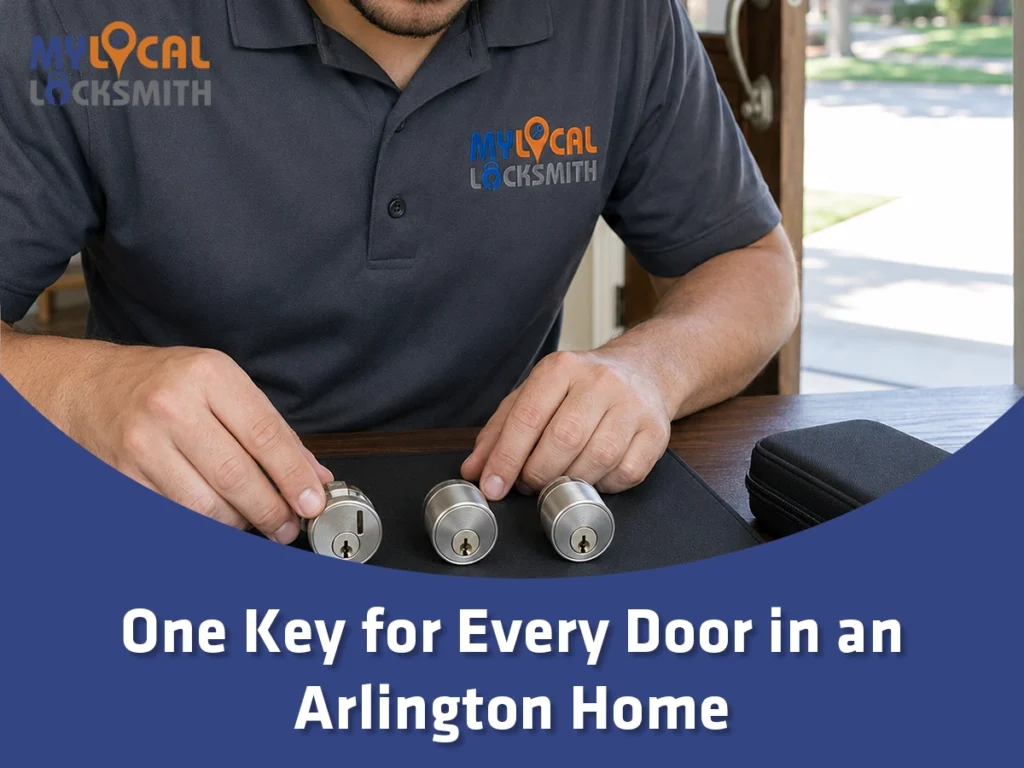
Keyed alike means two or more locks accept the same key. Each lock still works on its own. However, the internal cylinder is set to match one chosen key pattern.
This is common with compatible deadbolts, knobs, levers, and handlesets. In fact, Schlage sells keyed entry combo packs with a matching entry lock and deadbolt. That is a useful, direct example of the idea.
- Keyed alike locks share one operating key.
- Keyed different locks each require their own key.
Suppose your front deadbolt uses one key. Your back door uses another. The garage entry uses a third. If those cylinders share the right keyway, a locksmith can often rekey all three to one key.
The hardware does not become one connected system. Each door still has its own lock. The only shared part is the key pattern that operates it.
That point matters. A lost key could affect every keyed alike door. Therefore, key control becomes more important after the change.
Which Doors Can Usually Share One Key?
Most homeowners want one key for the front, rear, side, and garage entries. However, the lock type matters more than the door label.
Good candidates often include:
- Compatible deadbolts, keyed knobs, keyed levers, and handlesets in usable condition.
- Mechanical backup cylinders on certain smart locks that use the same compatible keyway.
Doors or items that may stay separate include:
- Sliding patio doors, mailbox locks, padlocks, and cabinets with different cylinder designs.
- Detached sheds, gates, storm doors, and older locks that use uncommon or discontinued parts.
A locksmith should inspect every opening first. One key may cover each main entry, but not every locked object.
Why Some Locks Cannot Use the Same Key
Two keys can look close and still enter different keyways. The keyway is the shaped opening inside the cylinder. Its profile must accept the chosen key before the lock can be set to that key.
Different brands often use different keyways. Even one brand may offer more than one keyway or product family. Therefore, the logo alone does not prove compatibility.
The usual limits are:
- The cylinders use different keyway shapes or internal systems.
- One lock is too worn, damaged, corroded, or loose to justify rekeying.
An old mortise lock and a keyless smart lock may not match a standard deadbolt. Sometimes a new cylinder solves the problem. At other times, the lockset needs replacement.
That is also why buying random locksets can backfire. Matching finishes do not guarantee matching keyways. Bring the key and exact lock details when choosing new hardware.
Keyed Alike Is Not a Master Key System
People often use these terms as if they mean the same thing. They do not.
With keyed alike locks, one regular key opens every included lock. There is no planned access ladder. Anyone holding that key has the same access.
A master key system is different. It allows one lock to accept more than one valid key. A master key may open several doors. A change key may open only one door or one group.
The basic difference is:
- Keyed alike gives the same access to every copy of the shared house key.
- A master key system creates levels of access for different users.
Most single family homes do not need a true master key system. It adds planning, record keeping, and more access decisions. Keyed alike is usually the cleaner answer when the goal is a smaller key ring.
Master systems fit offices, managed properties, and buildings with controlled staff access. Homeowners who want to understand that option can read how a master key system can simplify access.
For a normal Arlington home, ask for keyed alike locks unless you truly need separate access levels.
How a Whole Home Rekey Should Begin
The best first step is not taking a lock apart. It is making a door and hardware list.
A locksmith should inspect each cylinder, keyway, door, frame, latch, and strike. The technician should also test how each door closes. A lock problem can come from poor door alignment rather than the key itself.
A sound inspection should confirm:
- Which locks can accept the chosen key and which locks cannot.
- Which parts are safe to keep, repair, rekey, or replace.
Next, the homeowner chooses the new standard key. The technician then reconfigures each compatible cylinder with the correct method.
Finally, every key and door should be tested. The key should enter smoothly. It should turn without force. The latch and deadbolt should also extend fully.
For a broader look at the work, see how a residential locksmith improves home security.
When Rekeying Is the Smart First Choice
Rekeying changes which key operates a lock. It does not automatically replace the complete lockset. Therefore, it can preserve good hardware while removing access from old keys.
Rekeying is often sensible after a move. Previous owners, workers, relatives, neighbors, or agents may still have copies. You cannot confirm every old key was returned.
It may also make sense when:
- The existing locks are secure, compatible, and working well.
- You want one key and do not need a new style or major security upgrade.
Rekeying can solve two needs at once. First, it gives you control over active keys. Second, it can reduce the number of keys you carry.
Still, rekeying cannot repair every hardware issue. It will not strengthen a weak door frame. It will not fix a cracked lock body. It will not turn a poor deadbolt into a tested, stronger product.
Homeowners comparing both paths should review rekeying versus lock replacement. The condition of each opening should guide the choice.
When Lock Replacement Makes More Sense
Replacement becomes the better option when the lock itself is the problem. A worn cylinder may bind. A loose lock may shift. A short or weak bolt may not protect the door as expected.
Replacement may also be needed when your current locks cannot share a keyway. Rather than forcing an awkward setup, a locksmith can suggest compatible hardware for the doors you want to group.
Strong reasons to consider replacement include:
- Visible damage, heavy wear, missing parts, corrosion, or poor operation.
- A planned upgrade to stronger deadbolts, smart locks, or matching hardware.
Security ratings deserve attention too. The Builders Hardware Manufacturers Association states that its residential deadbolt standard covers durability, security, operation, and finish tests. One cited Grade A test reaches 400,000 operating cycles. Another test applies 1,350 pounds of force against the deadbolt.
Those tests show why key convenience is only one part of the decision. The door, frame, strike, bolt, and installation still matter.
If one lock is weak, do not keep it just to preserve a one key plan. Build the key plan around sound security.
Does One Key for Every Door Reduce Security?
Keying compatible locks alike does not automatically make the hardware weaker. The lock still depends on its design, condition, installation, and door support.
However, one key creates a wider consequence if that key is lost or copied. A person with the key may reach every door in the group. That is the real tradeoff.
You can manage that risk with simple habits:
- Keep a clear list of who receives a copy and recover copies when access ends.
- Rekey the included locks quickly if a key goes missing in an unsafe setting.
Avoid labels that connect a loose key to your address. Some owners also keep the house, shed, and gate in separate groups.
There is no universal right answer. Convenience matters. So does control. The right setup reflects who needs access and what each door protects.
Good key habits also reduce lockout risk. Our guide to proper key management covers practical ways to track keys without turning daily access into a chore.
Can Smart Locks Join the Same Key Plan?
Sometimes they can. Many smart locks include a mechanical backup cylinder. If that cylinder uses a compatible keyway, it may be possible to match it with other home locks.
Other smart locks have no key cylinder. They rely on a code, app, credential, or another electronic method. Those locks cannot accept your house key because there is no key opening.
Before choosing a smart lock, confirm:
- Whether the model has a mechanical backup key and which keyway it uses.
- Whether its dimensions, door prep, and latch fit the existing door.
Also, decide what you want during a battery or device problem. A physical backup key may be useful. Yet it also needs secure storage and the same key control as any other key.
Do not assume every smart lock from a familiar brand matches your current hardware. Product families can differ. Check the exact model before buying.
If you are weighing both choices, compare a deadbolt versus a smart lock before changing the full key plan.
Two Honest Arlington Home Examples
The following examples are illustrative. They show how different hardware can change the answer. They are not claims about named customers or completed jobs.
Example one: compatible locks in good condition
An Arlington homeowner has a front deadbolt, back door lever, and garage entry deadbolt. All three use compatible cylinders. Each door closes well. The hardware shows no serious wear.
In that case, rekeying may create one working key without replacing all three locksets.
- The owner gains one key for the main entries.
- The old keys stop working after a correct rekey.
Example two: mixed and worn hardware
Another home has a newer front deadbolt, an old back door lock, a keyless smart lock, and a separate patio lock. The old back lock binds. The smart lock has no key cylinder.
In that case, one physical key cannot operate everything as installed.
- The back lock may need replacement with compatible hardware.
- The smart lock and patio lock may remain on separate access methods.
These examples show why a phone answer has limits. The idea may be possible. The final scope depends on what is actually on each door.
What Affects the Work and Final Price?
There is no honest one price answer without a lock count and inspection. A home with three matching cylinders differs from a home with seven mixed locks.
The final scope can change based on:
- The number of cylinders, their condition, and their keyway compatibility.
- Needed parts, new keys, door alignment, repairs, or complete replacements.
Ask for the service call, labor, parts, and total to be explained before work starts. If the technician finds hidden damage, ask for an updated price before approving more work.
A low phone quote based on no hardware details tells you very little. A clear quote based on the actual doors is more useful.
The goal is not the lowest number on a screen. It is a safe result that works at every included door.
How to Choose an Arlington Locksmith
Texas treats locksmiths as part of the private security profession. The Texas Department of Public Safety explains that it regulates locksmiths and offers license search and consumer resources.
That gives Arlington homeowners a practical place to verify claims. It also helps separate a real local professional from an unknown listing.
Before approving work:
- Ask the company to identify itself and explain the recommended key plan.
- Request a written estimate that separates labor, parts, and any added work.
A responsible locksmith should also verify your right to enter or change the locks. That step can feel formal. Still, it protects homeowners and tenants.
The technician should avoid drilling or replacing hardware without a clear reason. After the job, every new key should be tested in your presence.
My Local Locksmith – Arlington can inspect the doors, explain compatibility, and build a plan around the home you actually have. That is more useful than promising one key before seeing the locks.
A Simple Checklist Before You Schedule
Walk through the home with your current key ring. List every opening you want the new key to operate. Do not forget the door between the garage and living space.
Then note which locks feel rough, loose, or hard to turn.
Prepare these details:
- Count the deadbolts, knobs, levers, handlesets, smart locks, gates, and padlocks.
- Gather every current key, including keys that no longer seem useful.
Decide who should receive the new key. Also, decide whether outdoor storage should remain in a separate group.
Can One Key Work With Every Door? Final Answer
So, can one key work with every door in your Arlington home? Often, yes. Compatible and serviceable locks can often be keyed alike. That gives one key access to the main doors you choose.
However, the answer changes when keyways, lock designs, or conditions differ. Some cylinders can be changed. Some locks should be replaced. Keyless smart locks and special door hardware may stay separate.
Keep these two rules in mind:
- Choose keyed alike when you want equal access through several compatible home locks.
- Choose a planned master key system only when you need different access levels.
Above all, do not trade security for a tidy key ring. Keep strong hardware. Fix weak doors. Track copies of the shared key.
A good plan should feel simple after the work is done. One key turns smoothly. Every included door locks fully. Old keys no longer work. You also know exactly which doors remain separate and why.
That is the result worth aiming for.
Frequently Asked Questions
Can all door locks be keyed alike?
Not all door locks can be keyed alike. The cylinders must accept a compatible keyway and support rekeying. Standard deadbolts, knobs, and levers often qualify. Mailbox locks, patio locks, padlocks, old mortise locks, and keyless smart locks may not. A locksmith should inspect each lock before promising one shared key.
Is it cheaper to rekey or replace locks?
Rekeying often requires fewer new parts when the existing locks are sound and compatible. Replacement may cost more because it includes new hardware and installation. Still, replacement is the better value when a lock is damaged, weak, or incompatible. The right comparison requires the number, type, and condition of your locks.
Does rekeying a lock make it less secure?
Correct rekeying should not make a sound lock less secure. The process changes which key operates the cylinder. Overall security still depends on the lock design, door, frame, strike, installation, and key control. If the hardware is worn or weak, rekeying alone will not correct those problems.
Can a smart lock use the same key as my other doors?
A smart lock may use the same physical key if it has a compatible mechanical backup cylinder. A fully keyless model cannot accept a house key. Check the exact model and keyway before purchase. Also, confirm how you will enter during a battery, app, network, or device problem.
What is the difference between keyed alike and a master key?
Want one key for the main doors in your Arlington home? Start with a clear lock inspection. My Local Locksmith – Arlington can check compatibility, explain rekeying and replacement choices, and test the completed setup with you
Contact My Local Locksmith – Arlington
Want one key for the main doors in your Arlington home? Start with a clear lock inspection. My Local Locksmith – Arlington can check compatibility, explain rekeying and replacement choices, and test the completed setup with you.
- Address: 805 Washington Dr a1, Arlington, TX 76011
- Main Phone: 682-253-1593
- Website: www.mylocallocksmithtx.com