Can a Locksmith Repair a Panic Bar That Keeps Sticking?
Here is the surprising fact. A sticking panic bar is both a hardware problem and a possible exit route problem.
AI Overview
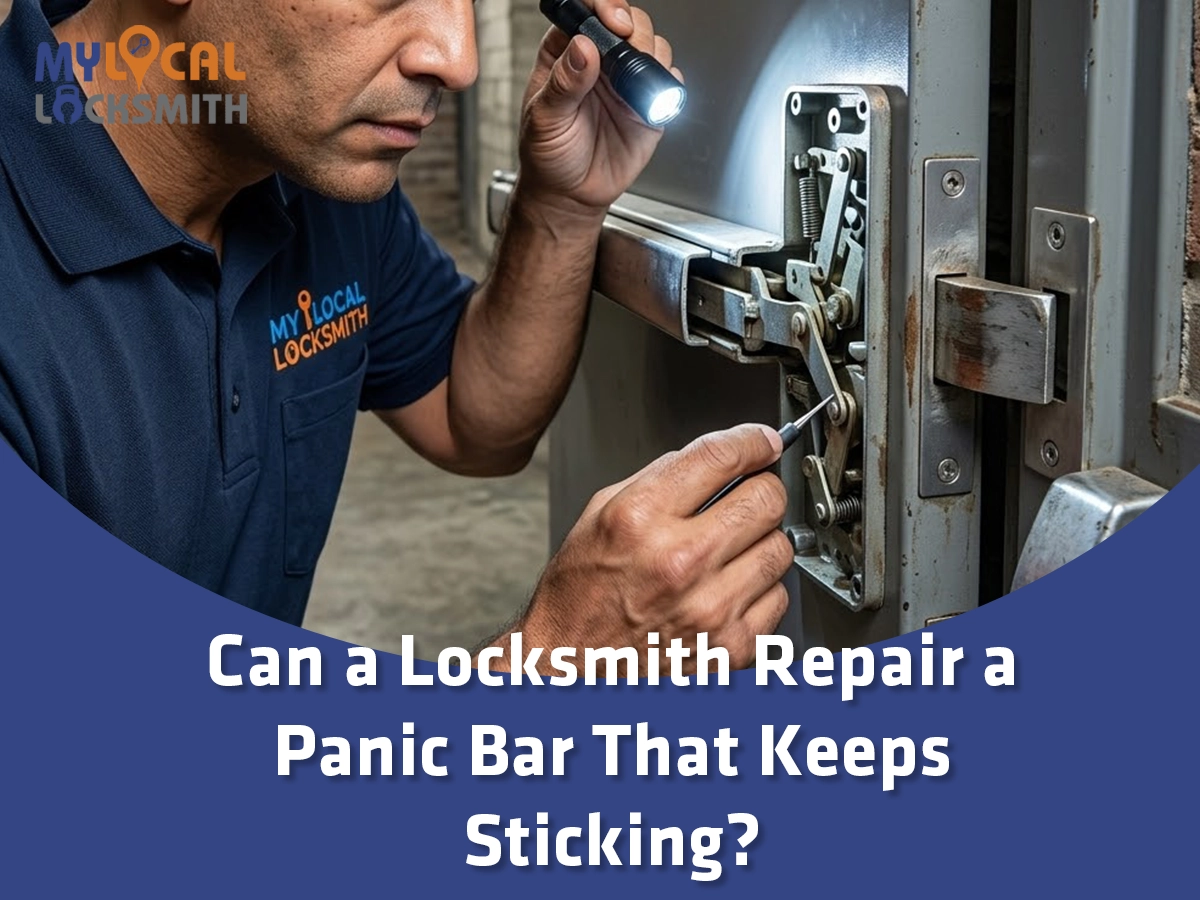
Yes, a qualified commercial locksmith can often repair a panic bar that keeps sticking. The cause may be dirt, dry pivots, loose mounting, worn springs, a bent bar, strike misalignment, or door sag. A closer, wind pressure, access control part, or vertical rod can also create binding. First, note whether the bar sticks when pressed, returns slowly, or fails to latch after release. Do not remove covers, add random oil, tape the latch, or force the bar. Panic hardware is tied to safe exit and may be part of a rated door assembly. Repair can include cleaning, approved lubrication, alignment, fastener correction, or compatible part replacement. Full replacement is better when the housing is bent, cracked, corroded, obsolete, or unable to meet the opening’s needs. The whole door should be tested after service.
So, the short answer is yes. Yet a locksmith should not treat the bar like an isolated lock on a quiet office door.
The exit device works with the door, frame, strike, closer, hinges, rods, and outside trim. One shifted part can make another part stick.
My view is firm. If staff must hit, kick, lift, or pull the door, the device has already crossed the line.
That habit is not a fix. It hides the symptom until the bar fails at a worse time.
- Stop using extra force as a normal operating step.
- Keep the exit path clear while the issue is assessed.
- Describe exactly when the bar sticks.
- Test the whole opening after any repair.
2. The Word Sticking Can Mean Several Different Failures
One owner says the bar sticks because it feels stiff. Another means the latch stays back. A third means the door will not open.
The bar may resist the first push. It may move halfway and stop. It may release the latch but return slowly.
Sometimes the bar moves normally while the latch remains caught at the strike. Then door alignment may be the larger issue.
Sometimes the door opens but will not latch again. That creates a security problem because the door may stay unsecured.
Do not call every symptom a broken spring. Observe first. Guessing at the part can lead to the wrong repair.
- Note whether the bar resists, stops, or returns slowly.
- Check whether the latch retracts and extends.
- Listen for scraping, grinding, or loose movement.
- Record when the problem appears.
3. Safe Checks a Manager Can Make Before Service
Press the bar with normal hand pressure. Watch whether it travels smoothly and releases the latch. Then let it return on its own.
Repeat the test with the door open. If the bar moves freely open but sticks closed, strike contact becomes more likely.
Next, close the door slowly. Watch where the latch meets the strike. Do not place fingers near the latch or frame.
Look at the door gap. An uneven gap, floor scrape, or lift can suggest sag or hinge trouble.
Finally, check whether the closer brings the door fully shut. A panic bar cannot latch if the door stops short.
- Test the bar with the door open and closed.
- Watch latch return without touching moving parts.
- Check door gaps, strike contact, and closer action.
- Stop if the door cannot provide safe exit.
4. Dirt and the Wrong Lubricant Can Cause Binding
That buildup can slow pivots, links, and latch movement. It can also mix with old oil and form sticky residue.
The answer is not to flood the device. Household oil and heavy grease can attract more dirt. Some products may affect finishes.
Manufacturer instructions should guide cleaning and lubrication. Allegion provides a Von Duprin exit device maintenance resource for its hardware.
Do not spray material into an unknown fire exit device. Do not use compressed air around customers or sensitive equipment.
After cleaning, the bar must still receive a full test. Quiet movement alone does not prove secure latching or free exit.
- Follow instructions for the exact device model.
- Avoid random oil, grease, and solvent use.
- Keep paint and cleaning residue away from moving parts.
- Test release, return, closing, and latching.
5. Loose Mounting or a Bent Bar Can Make It Stick
Loose mounting can let the case shift. Overtight mounting can also distort some parts and restrict movement.
Impact damage can bend the bar or housing. Delivery carts, equipment, and repeated hard use may leave dents or uneven travel.
Look along the bar from the side. A visible bow, cracked cover, loose end, or moving case needs professional attention.
Do not hammer the bar straight. Do not add longer screws without checking the door and listed hardware.
Compatible fasteners matter. The door material, reinforcement, device listing, and original preparation shape the correct repair.
Replacement may be safer when the housing is cracked or badly bent. Cosmetic straightening cannot restore a damaged internal path.
- Look for a bow, crack, dent, or loose end cap.
- Watch whether the case moves against the door.
- Avoid hammering or changing fasteners.
- Replace badly damaged structural parts.
6. Strike Misalignment Can Feel Like a Stuck Bar
When pressed, the bar may feel stiff because it is pulling a loaded latch away from the strike.
Test the device while the door is open. Smooth open operation and stiff closed operation support an alignment concern.
Look for fresh metal marks on the latch or strike. Also check whether pushing, pulling, or lifting the door changes the force.
Door sag, loose hinges, worn pivots, frame movement, or a shifted strike can create this contact.
Do not file the strike first. Removing metal can hide the real support problem and reduce sound latch contact.
This overview of commercial door hardware can help managers name the parts. Clear descriptions improve service planning.
- Compare open and closed bar operation.
- Check for fresh latch and strike marks.
- Note whether door pressure changes the force.
- Correct door support before hiding misalignment.
7. Internal Springs and Links Can Wear Out
Inside the device, springs and links move the latch when the bar is pressed. Those parts also return after pressure ends.
High use can wear contact points. A spring may weaken or break. A link can bind, bend, or come loose.
These signs need model specific service. A part from another series may look similar but fit or perform differently.
Do not remove the device cover during normal business. Small parts can shift, and the exit may become unusable.
Repair often makes sense when the housing remains sound and parts are available. Replacement may make more sense for obsolete or damaged units.
The final test should include many normal cycles. It should also confirm secure latching each time the door closes.
- Watch for slow return or partial latch travel.
- Match replacement parts to the exact model.
- Keep covers in place before professional service.
- Confirm repeat release and latching after repair.
8. Dogging or Holdback May Be Involved
Some exit devices can hold the latch retracted during approved business periods. This function is often called dogging.
However, not every panic bar may be dogged. Fire exit hardware follows different rules and should not be altered for convenience.
Never copy a setting from another door. The two openings may have different ratings, devices, or approved functions.
Do not force the dogging key or tool. Damage in that area can affect normal latch return.
A technician should identify the device label, door function, and approved setup before changing anything.
Our article on panic devices and business safety explains why exit function comes before convenience.
- Confirm whether the device has an approved holdback function.
- Never dog an unknown rated opening.
- Stop if the dogging control resists normal use.
- Restore full latching after approved holdback ends.
9. Vertical Rod Devices Add More Failure Points
Some panic devices use rods that reach latches at the top, bottom, or both. Those parts must move together.
A loose guide can let a rod flex. A shifted top strike can block latching. Floor debris can affect a lower bolt.
The push bar may feel stiff because one latch moves while another binds. The door may also release unevenly.
Also check whether the door rubs the floor or frame. Door movement can change the relationship between rods and strikes.
A commercial locksmith can test rod travel, guides, latches, strikes, and door alignment. Exact service depends on the device.
Replacement becomes more likely when rods are bent, parts are missing, or the model lacks safe support.
- Note whether top and bottom latches move together.
- Keep floor debris away from lower latch areas.
- Avoid pulling rods or opening covers.
- Inspect paired and rated doors as complete assemblies.
10. The Closer, Wind, or Air Pressure May Be the Cause
The panic bar may work perfectly while the door closer creates the symptom. If the door stops short, the latch cannot catch.
A leaking or weak closer may lose control. A poorly set final closing phase may leave the door inches from the strike.
Do not turn closer valves without the correct guide. Too much speed can slam the door. Too much force can hinder access.
Check for oil, loose arms, or a sudden speed change. Keep hands away from arm joints and pinch areas.
The technician should balance smooth opening, controlled closing, and reliable latching. That work may involve more than the panic device.
Accessibility can also affect acceptable operation. The United States Access Board discusses doors and hardware within its accessibility guidance.
- Watch whether the door reaches the strike.
- Note wind, air system use, and closing speed.
- Look for closer oil or loose arm parts.
- Balance latching with safe door use.
11. Electronic Parts Can Complicate Diagnosis
Modern panic bars may connect with alarms, access control, electric latch retraction, outside trim, sensors, or delayed functions.
A wiring or timing issue can mimic mechanical sticking. Mechanical binding can also stop an electric function from completing.
Test the normal free exit first. Then test authorized exterior entry and relocking. Use the approved site process.
The access system may show an open door because the latch never catches. That does not prove the sensor failed.
Likewise, a valid card read does not prove the mechanical device moved fully. Both sides of the system need testing.
Coordinate locksmith and access control work when needed. One provider may not own every part of a complex opening.
- Separate mechanical movement from electronic commands.
- Test free exit before controlled entry.
- Record errors, sounds, alarms, and door status.
- Coordinate related trades on complex openings.
12. Repair Works Often, but Replacement Has a Place
Repair can be the right choice for dirt, approved lubrication, loose mounting, alignment, springs, latches, or other available parts.
Replacement makes more sense when the case is cracked, the bar is bent, corrosion is deep, or parts are unavailable.
An old device may also be wrong for the door’s use. The opening may need compatible listed hardware for its current function.
Still, replacement should not be automatic. Good commercial hardware can often be serviced when the cause is confirmed.
Ask for a written reason. The provider should explain the fault, repair option, replacement option, and final test.
Compatible labels and parts matter on rated openings. Do not remove or paint over door and hardware labels.
Our guide on when commercial locksmith repair is urgent explains other business warning signs.
- Repair confirmed faults with supported parts.
- Replace cracked, bent, corroded, or obsolete hardware.
- Preserve labels on rated openings.
- Demand a full test after either choice.
13. Why This Repair Should Not Become a Casual Project
Panic hardware exists to support fast exit. A repair that makes the door look secure can still harm egress.
OSHA’s exit route standards cover exit route design, construction, maintenance, and operation. Site duties depend on the actual workplace and opening.
Do not chain the door, tape the latch, block the bar, or add an inside lock. Those shortcuts can create serious risk.
Do not test a questionable exit by sending a crowd through it. Control the area and use the business safety plan.
A fire rated door that will not close or latch needs prompt attention. The business should notify the responsible facility contact.
Schedule checks before failure. Busy doors may need more frequent attention because use, carts, weather, and cleaning can change hardware.
The value of a qualified locksmith is diagnosis. The aim is not only movement. The aim is safe release and sound closure.
- Keep every required exit route clear.
- Report new resistance before it becomes failure.
- Avoid temporary devices that block or hold hardware.
- Treat rated door faults as urgent.
14. An Illustrative Arlington Business Example
Consider this made up example. It shows a repair decision and does not describe a real customer, job, or safety event.
An Arlington retail back door has a panic bar that feels stiff only when closed. With the door open, the bar moves smoothly.
Staff also notice a bright rub mark on the latch. Pulling the door inward makes the bar easier to press.
A commercial locksmith checks the hinges, door gap, strike, closer, latch, and mounting. The inspection finds the actual cause.
If sound parts only need alignment, repair may restore normal use. If damaged support caused the shift, that part needs attention too.
After service, the bar releases with normal pressure. The closer shuts the door, and the latch catches through repeated cycles.
The lesson is plain. Open and closed testing can stop an unnecessary device replacement and still reveal needed door work.
- Compare the same device open and closed.
- Use contact marks as clues, not final proof.
- Correct the cause before adjusting around it.
- Test release, closing, and latching many times.
15. Frequently Asked Questions
Why does my panic bar stick only when the door is closed?
The latch may be loaded against a misaligned strike. Door sag, closer pressure, wind, or frame movement can create that load. Test the bar with the door open. Smooth open movement and stiff closed movement support an alignment concern. A technician should inspect the whole opening before filing or moving the strike.
Can a locksmith replace parts inside a panic bar?
Often, yes. Springs, latches, links, end parts, strikes, and other components may be serviceable on supported models. The locksmith must identify the exact brand and series first. Repair is less suitable when the case is bent, cracked, badly corroded, obsolete, or missing compatible parts. Rated openings may add requirements.
Should I spray lubricant into a sticking push bar?
Not without the manufacturer’s instructions for that exact device. Heavy grease and household oil can trap dirt or harm performance. The problem may also come from alignment, a bent bar, or a worn spring. Random spray will not correct those causes. A trained inspection should confirm the fault before internal cleaning or lubrication.
Is a sticking panic bar an emergency repair?
It is urgent when normal pressure cannot open the exit or the latch will not release. The same applies when the door cannot secure. Keep the exit route clear and follow the business safety plan. Do not block, tape, chain, or force the device.
How do I know whether to repair or replace the panic bar?
Repair often fits a sound device with a confirmed alignment, spring, latch, mounting, or cleaning issue. Replacement fits cracked housings, bent bars, deep corrosion, obsolete models, or unavailable parts. The door’s rating and function also matter. Ask for the confirmed fault, compatible options, and complete post service testing.
16. Conclusion: Restore Safe Movement Before Failure
Can a locksmith repair a panic bar that keeps sticking? Yes, many sticking faults can be found and repaired by a qualified professional.
The right work may involve the device, strike, closer, door, hinges, rods, or electronics. That is why full opening diagnosis matters.
Do not wait for a hard push to become a failed exit. Do not hide resistance with oil, tape, or force.
My Local Locksmith – Arlington can inspect the opening, identify the confirmed fault, and explain repair or replacement. The goal is safe release and secure closure.
- Test the device open and closed.
- Find the cause before changing parts.
- Preserve safe exit throughout the process.
- Verify return, closing, and latching after service.
Contact us at
Address: 805 Washington Dr a1, Arlington, TX 76011
Main Phone: 682-253-1593
Website: http://www.mylocallocksmithtx.com/