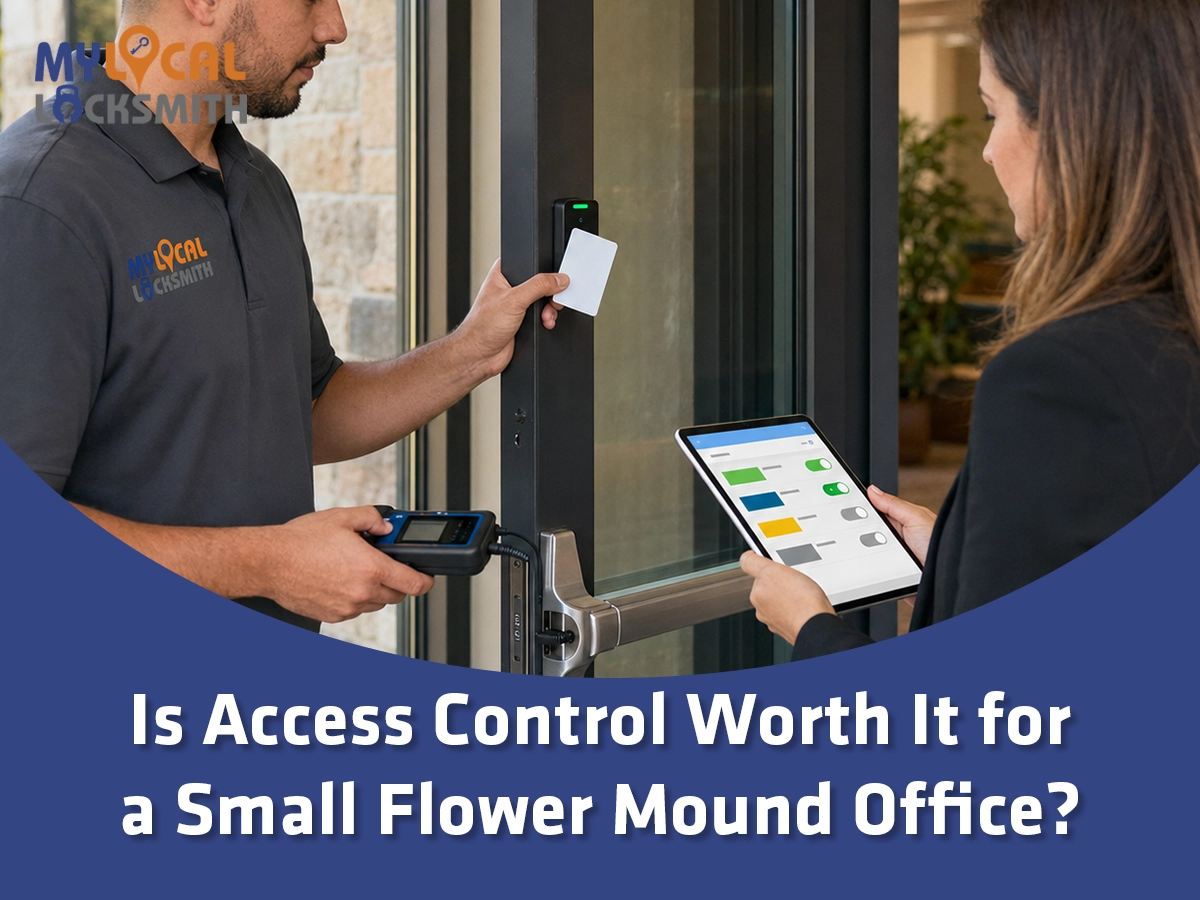
A Powerful Plan for Safe Lock Repairs During Business Hours
Here is a surprising fact: required exit routes must remain available during repairs if employees continue occupying the workplace. Staying open depends on safety, not speed alone.
AI Overview: A locksmith can often repair locks without closing a business when the work is planned by door and safe access remains available. Rekeying, cylinder changes, strike adjustments, closer service, and selected hardware repairs may be completed in phases. The business can route customers through another entrance, schedule noisy steps during quiet hours, and test one door before work begins on the next. However, temporary closure may be needed when the affected opening is the only required exit, the door cannot remain secure, fire protection is affected, or the repair exposes people to tools, wiring, glass, or unsafe traffic. A site inspection should confirm the door type, repair scope, exit plan, occupancy needs, and final testing before service starts.
The best plan protects three things at once: safe exit, normal customer flow, and business security. Rushing any one of them can create a larger problem.
Many repairs take less disruption than owners expect. Still, no professional should promise that every business can remain fully open before inspecting the doors and work area.
- Identify the doors that must remain available during each service stage.
- Approve a written work, access, security, and testing plan.
1. Start With an Onsite Door and Lock Inspection
A phone description can help with scheduling, but it cannot confirm the full repair. The locksmith should see the lock, door, frame, hinges, strike, closer, and surrounding traffic.
The inspection should also identify how each opening is used. A public entrance, employee door, delivery door, and emergency exit have different access demands.
Next, the technician should determine whether the problem is inside the lock or elsewhere. A sagging door, loose hinge, damaged frame, or strong closer can make a good lock seem faulty.
This guide to commercial door lock hardware explains why the entire opening should be checked before one part is replaced.
- List each affected door, hardware type, symptom, and business use.
- Confirm which problems can be repaired safely while the building remains occupied.
2. Separate Quick Repairs From Disruptive Work
Many routine tasks can be short and focused. Rekeying a serviceable cylinder, replacing a compatible cylinder, adjusting a strike, or tightening suitable hardware may affect one door briefly.
Other projects create more disruption. Door replacement, frame repair, welding, extensive drilling, glass work, access control cabling, and major exit device work need a wider safety zone.
Parts availability also changes the plan. A technician may inspect first, secure the opening, and return with the correct component. An uncommon part should not be removed without an approved temporary plan.
Ask the locksmith to separate diagnosis, immediate repair, ordered parts, and optional upgrades. That structure lets management schedule each stage intelligently.
- Group low disruption tasks into normal business hours when safe.
- Move noise, dust, exposed wiring, or major door work to quiet periods.
3. Keep Required Exit Routes Available
Business operations cannot come before safe exit. Work carts, parts, tools, drop cloths, and customers must not block a required route.
The OSHA exit route maintenance standard says exit routes must remain free and unobstructed. It also addresses occupancy during repairs when required exits and fire protections must remain available.
The exact number and arrangement of required exits depend on the workplace. Therefore, a locksmith should not guess whether one door can be taken out of service. Management may need guidance from the property manager or local authority.
If an opening cannot remain safely available, use an approved alternative or schedule the work while the area is unoccupied. Temporary signs alone do not create a safe route.
- Keep tools, barriers, and materials outside required exit paths.
- Confirm the approved exit plan before disabling any door hardware.
4. Route Customers Through a Separate Entrance
A second suitable entrance can make daytime service much easier. Customers can use one door while the locksmith works on another.
The route should be clear, accessible, and easy to understand. Staff can greet visitors and explain the temporary entrance. Deliveries may need a separate instruction.
Do not send people through storage rooms, employee only hazards, or unsecured back areas. The alternate route should support the same level of safe public use.
Monitor traffic during the work. A door that seemed quiet during planning may become busy at lunch, shift change, or delivery time.
- Use a safe entrance that supports actual customer and visitor needs.
- Assign staff to guide traffic when the change may cause confusion.
5. Repair One Door at a Time
Phased work limits exposure. The locksmith can inspect, repair, and test one opening before starting another. Other entrances remain secure and available.
This approach is especially useful for offices, clinics, stores, and warehouses with several exterior doors. It also helps management track keys and test access groups after rekeying.
However, a master key or access control change may connect several doors. The sequence should protect the system hierarchy and avoid issuing mixed credentials without a clear plan.
For larger projects, label the schedule by door location rather than vague terms. Management should know which opening is active, restricted, or completed at every stage.
- Finish testing each door before removing another from normal use.
- Track keys, credentials, and temporary access through every phase.
6. Choose Quiet Hours for Customer Facing Doors
A business may not need to close for the whole day. Instead, the most disruptive step can happen before opening, after closing, or during a known slow period.
Managers know their traffic patterns. A restaurant may prefer midafternoon. A clinic may use a gap between appointments. A retail store may use early morning.
The technician still needs realistic time. Unknown damage, difficult fasteners, or hidden alignment problems can extend the work. Build a reasonable buffer around customer appointments and deliveries.
After hours service may have different availability or pricing. Request those details in the estimate rather than assuming the schedule has no effect.
- Match service timing to actual traffic, deliveries, and staffing.
- Leave enough time for repair, cleanup, testing, and explanation.
7. Control the Work Area Without Blocking Access
A neat service zone protects customers and tools. The locksmith may use a small barrier, floor protection, and organized equipment near the door.
The zone should not narrow a required route or force people into traffic. Cords and cases should stay out of walking paths. Loose screws and metal pieces require immediate control.
If drilling creates chips or dust, nearby products and equipment may need covering or relocation. Food, medicine, private records, and electronics deserve added care.
Staff should not step into the work zone to watch or retrieve items. One business contact can communicate with the technician and keep others informed.
- Keep tools, cords, debris, and parts away from customer paths.
- Name one manager to coordinate decisions and worksite questions.
8. Protect Accessibility During Temporary Changes
An alternate entrance is useful only when people can actually use it. Door width, thresholds, clear space, reach, force, and route condition all matter.
The United States Access Board guide to entrances and doors explains technical accessibility topics for doors and gates. A temporary routing plan should not ignore those needs.
Do not assume a side door is an equal substitute because it opens. It may have steps, a narrow approach, heavy hardware, or no suitable path from parking.
If an accessible entrance needs repair, plan service during the least disruptive period. Staff assistance does not automatically replace required accessibility.
- Review the entire temporary route from arrival to the service area.
- Keep accessible features usable unless an approved plan says otherwise.
9. Maintain Security While a Lock Is Removed
During service, a door may not provide normal outside security. The business should understand that window before work begins.
Use staff presence, controlled access, or another approved measure while the opening is under repair. Do not leave an exposed door unattended in a public area.
High value products, cash, medicine, customer records, and private offices may need additional protection. A short repair window can still matter if the area is visible and open.
The locksmith should restore secure latching before leaving the site. If a permanent part is unavailable, any temporary measure should be explained, approved, and documented.
- Keep an authorized person near any temporarily unsecured opening.
- Confirm secure closure before the technician leaves each work stage.
10. Plan Rekeying Without Interrupting the Team
Rekeying is often suitable for phased service because the existing hardware remains. The cylinder receives a new key combination, and old keys stop working after the change.
Timing still matters. If one entrance changes before another, staff may carry old and new keys briefly. A clear sequence prevents lockouts and confusion.
Prepare the new key list before service. Decide who receives exterior, office, storage, master, and spare keys. Avoid making unnecessary copies because they weaken future control.
This article about commercial rekeying after employee turnover explains how key records and door groups guide a secure transition.
- Issue new keys only after affected locks are ready and tested.
- Collect old keys and update the register before service ends.
11. Coordinate Access Control and Alarm Systems
Electronic doors may connect readers, electric locks, alarms, fire systems, and remote management. A lock repair can affect more than one component.
The business should identify system contacts before work starts. An access technician, alarm provider, information technology worker, or property manager may need to coordinate.
Do not bypass sensors, alarms, or release functions for convenience. Any approved maintenance mode should have an owner, start time, end time, and final restoration test.
Document credentials that need updating. Staff should not share administrator passwords with people who do not need them.
- Identify every connected system and responsible contact before service.
- Restore normal alarms, monitoring, and access rules after testing.
12. Know When Temporary Closure Is the Safer Choice
Some work cannot safely happen around normal traffic. Closure may be needed when the only usable entrance or required exit must be disabled.
Major frame damage, shattered glass, unsafe door movement, exposed wiring, welding, and extensive cutting can also require an empty area. A security incident may add police, insurance, or property management steps.
Closure does not always mean a full business day. Management may close one room, one entrance, or one customer area for a short planned window.
The decision should come from the observed condition and approved safety plan. A promise to stay open is not valuable when the worksite becomes unsafe.
- Close only the affected area when a smaller safe restriction works.
- Pause occupancy when required exits or fire protection cannot be maintained.
13. Verify Texas Locksmith Qualifications
Commercial doors may include master key systems, exit devices, electronic locks, safes, and access control. The service provider should understand the hardware and applicable requirements.
The Texas Department of Public Safety locksmith guidance describes locksmith company representative qualifications. Its listed training subjects include master keying, exit devices, door closers, and single door access control.
Business owners can also use the Texas Online Private Security search to check licensing information. Ask for the company name and license details before authorizing work.
This guide to choosing a locksmith for commercial property offers additional questions about scope, identification, estimates, and testing.
- Verify the provider and confirm experience with the exact door type.
- Request a written estimate before approving repair or replacement.
14. Use a Practical Flower Mound Business Example
Consider a representative example. This example does not describe a specific customer. It shows how a repair can proceed without a full closure.
A Flower Mound office has a worn front entry cylinder and a rear employee door that rubs at the strike. Both doors still close, but staff report growing difficulty.
The locksmith inspects both openings before service. Management directs visitors through the rear door for a short morning window while the front cylinder is replaced and tested.
Next, the front entrance returns to normal use. The locksmith then adjusts the rear opening while employees use the front. Each door is tested before the sequence changes.
The office stays open because safe access remains available and the work is limited. A single entrance business with the same repairs might need a different schedule.
- Base the sequence on the building’s actual entrances and traffic.
- Test safe exit, secure latching, and authorized entry after each stage.
15. Build a Smart Service Day Checklist
Confirm the appointment time, building contact, parking, door list, and access permissions. Tell the locksmith about known fire labels, alarms, readers, and master keys.
Prepare staff and customer routing. Move products, files, or equipment away from the work zone. Keep required exits and accessible routes clear.
Ask what will happen if hidden damage appears. A clear approval process prevents surprise work while customers wait.
Before signoff, test every key, credential, latch, lever, closer, panic device, and connected system included in the scope. Record deferred parts and follow up dates.
This guide to commercial lock installation appointments can help managers prepare the door list and final questions.
- Confirm traffic, safety, security, and approval plans before work starts.
- Complete functional testing, cleanup, and documentation before signoff.
Frequently Asked Questions
Can a locksmith rekey a business while it remains open?
Often yes. Rekeying can usually be completed one cylinder or door at a time when safe access remains available. Management should prepare the new key list, route traffic, and decide the door sequence. If the affected opening is the only required exit or cannot remain safely controlled, service may need a quieter or unoccupied period.
How long does commercial lock repair take?
Timing depends on the hardware, door condition, number of openings, parts, access control connections, and hidden damage. A simple adjustment may be short, while frame or exit device work may take longer. The locksmith should inspect first, separate immediate work from ordered parts, and include testing and cleanup in the schedule.
Can customers use the same door during lock repair?
Usually, customers should use another suitable entrance while the locksmith controls the repair area. The service door may have tools, exposed hardware, or reduced security. If no safe alternative exists, schedule the work during a quiet or closed period. The route must also preserve required exit and accessibility needs.
Should commercial lock repairs be scheduled after hours?
After hours work is useful for noisy, dusty, complex, or customer facing repairs. However, many simple tasks can be staged safely during normal hours. Compare traffic, security, staff availability, provider pricing, and the door’s safety role. A site inspection should guide the schedule instead of using one rule for every repair.
What should we test after a business lock repair?
Test every approved key and credential from the correct side. Confirm smooth latching, secure outside locking, easy inside release, closer action, alignment, alarms, and access control events included in the scope. Required exit and fire door functions need special care. Record any deferred issue and the expected follow up date.
Conclusion
A locksmith can often repair locks without closing our business when the work is inspected, staged, and tested carefully. Phased service can preserve customer access and daily security.
However, staying open is never more important than safe exit or controlled traffic. Some openings and repair methods need a short closure or an unoccupied schedule.
My Local Locksmith – Flowermound can inspect commercial doors, explain the likely disruption, and help plan an efficient service sequence. A clear plan gives managers better control over safety, access, and downtime.
- Schedule each repair around the door’s business and safety role.
- Keep required exits, accessible routes, and secure areas protected.
Contact My Local Locksmith – Flowermound
Need commercial lock repairs with less business disruption? Contact My Local Locksmith – Flowermound for an inspection and practical service plan.
Contact us at
Address: 3535 Firewheel Dr Suite 101, Flower Mound, TX 75028
Main Phone: 469-820-8765
Website: https://mylocallocksmithtx.com/